I’ve always been fascinated by audio LP manufacturing, and some of the tricks they did with the format. From the reground/recycled and Dynaflex albums of the ’70’s, to the 3-sided The Monty Python Matching Tie and Handkerchief album, this stuff is just fascinating to me.
Today I learned that Todd Rundgren’s album Initiation is one of the longest commercial LPs ever pressed, clocking in at 67 minutes! Side two is the epic instrumental A Treatise on Cosmic Fire conceptually inspired by Alice A. Bailey’s book A Treatise on Cosmic Fire. (A book he would also dip into for his majestic The Seven Rays.)
Here’s the details on how the album was manufactured with some insight into why producers avoided such lengths.
From Wikipedia: At over sixty-seven minutes, Initiation is one of the longest commercially-released albums contained to a single LP disc. Due to a plastic shortage, in order to keep the album on one vinyl LP, Rundgren had to limit and EQ the master so the bass response was rolled off to keep the grooves small enough to cut onto a single disc; he also had to speed up the first half of Side One (“Real Man” to “Eastern Intrigue”) and speed up the entirety of Side Two to eliminate 2–3 minutes from each side (5). The album’s original inner sleeve included a note which stated: “Technical note: Due to the amount of music on this disc (over one hour), two points must be emphasized. Firstly, if your needle is worn or damaged, it will ruin the disc immediately. Secondly, if the sound does seem not loud enough on your system, try re-recording the music onto tape. By the way, thanks for buying the album.”
And since you read all the way to the end, a small present. Enjoy.
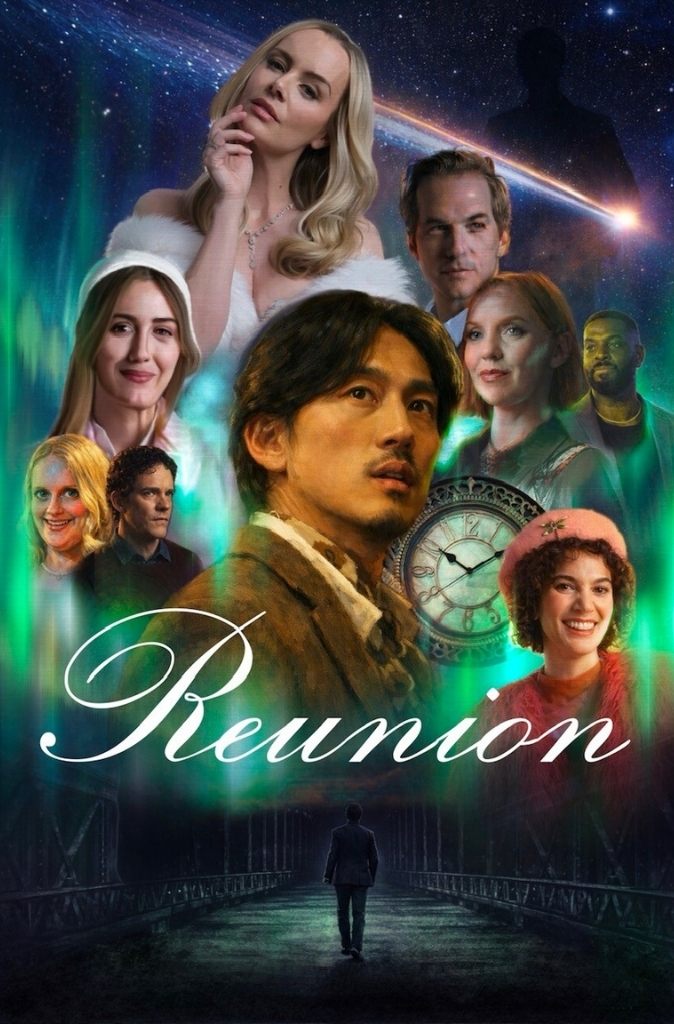
What if, for one night, you could step back into the person you thought you were going to be? Guy Park isn’t young anymore, and the life he sacrificed for family and responsibility has left him quietly stranded. When he walks into his 20th high school reunion, he’s not just revisiting old hallways and familiar faces; he’s confronting the version of himself that never got a chance to exist.
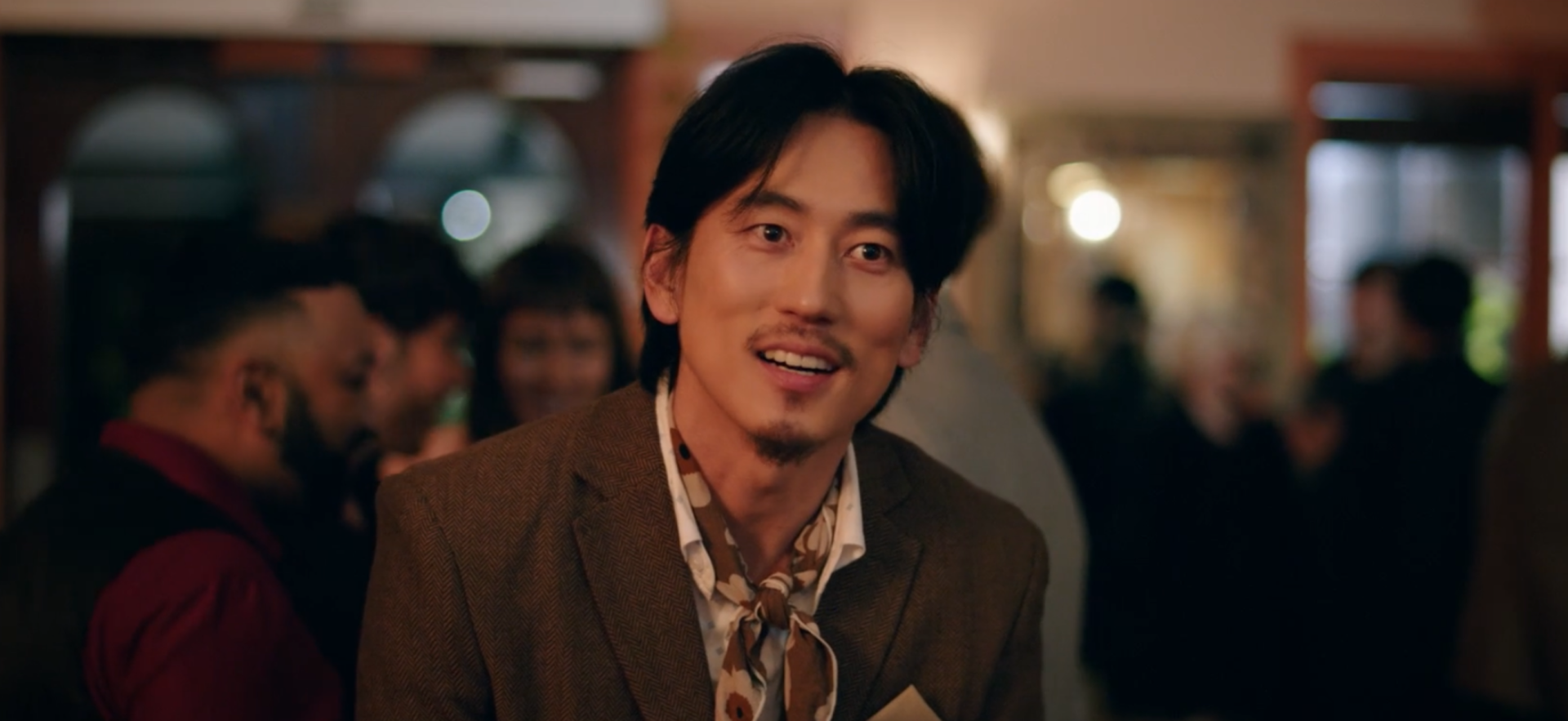
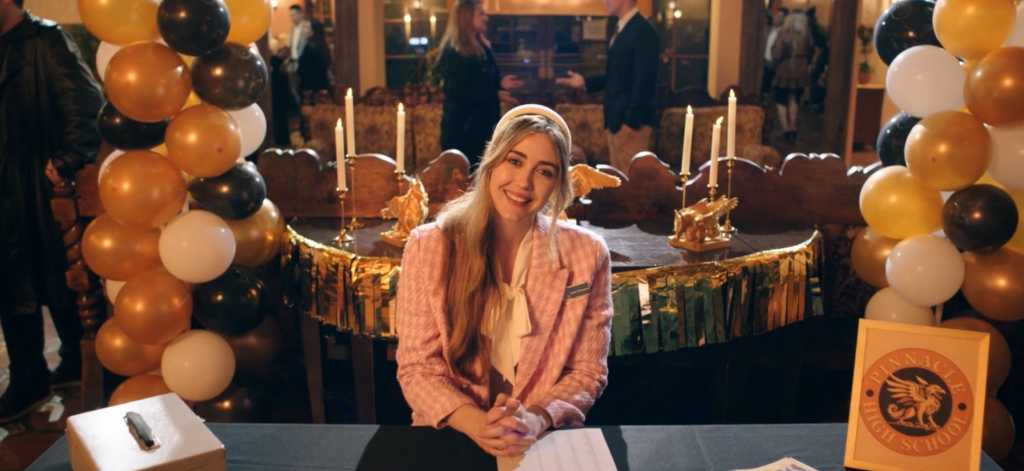
What if you could be someone else for an evening? Guy Park, who works at his family’s mortuary, decides to attend his 20th high school class reunion. But accidentally ends up in a 20th high school reunion for the private high school in town. And since the private high school only had one Asian student, they assume he is that person – a reclusive billionaire.
Guy must decide if he’ll adopt this new persona to help save his job, improve his life, or just have some fun with it. What happens next is anything but predictable.
The cast includes the usual high school stereotypes of prom queen, class president, and football heroes. But even these roles have an unusual depth to them. There’s room for everyone in this film to make discoveries about themselves. And there’s a lot of humor in their getting there. Surprises and twists make this a reunion to remember.
The Director and Screenwriter, John Woochong Kim, grew up in the San Francisco Bay area, and has figured in a lot of local press lately. The movie was filmed in Los Angeles, just as the massive Palisades fires were erupting. But Los Angeles doesn’t have an exclusive role in this film, it really feels like a local production. You could tell that the premiere showing audience was full of cast, crew and family.
We really enjoyed this movie even after attending our own 20th high school reunions! It was funny, yet true of what can happen when old grudges, romances, and real life collide.
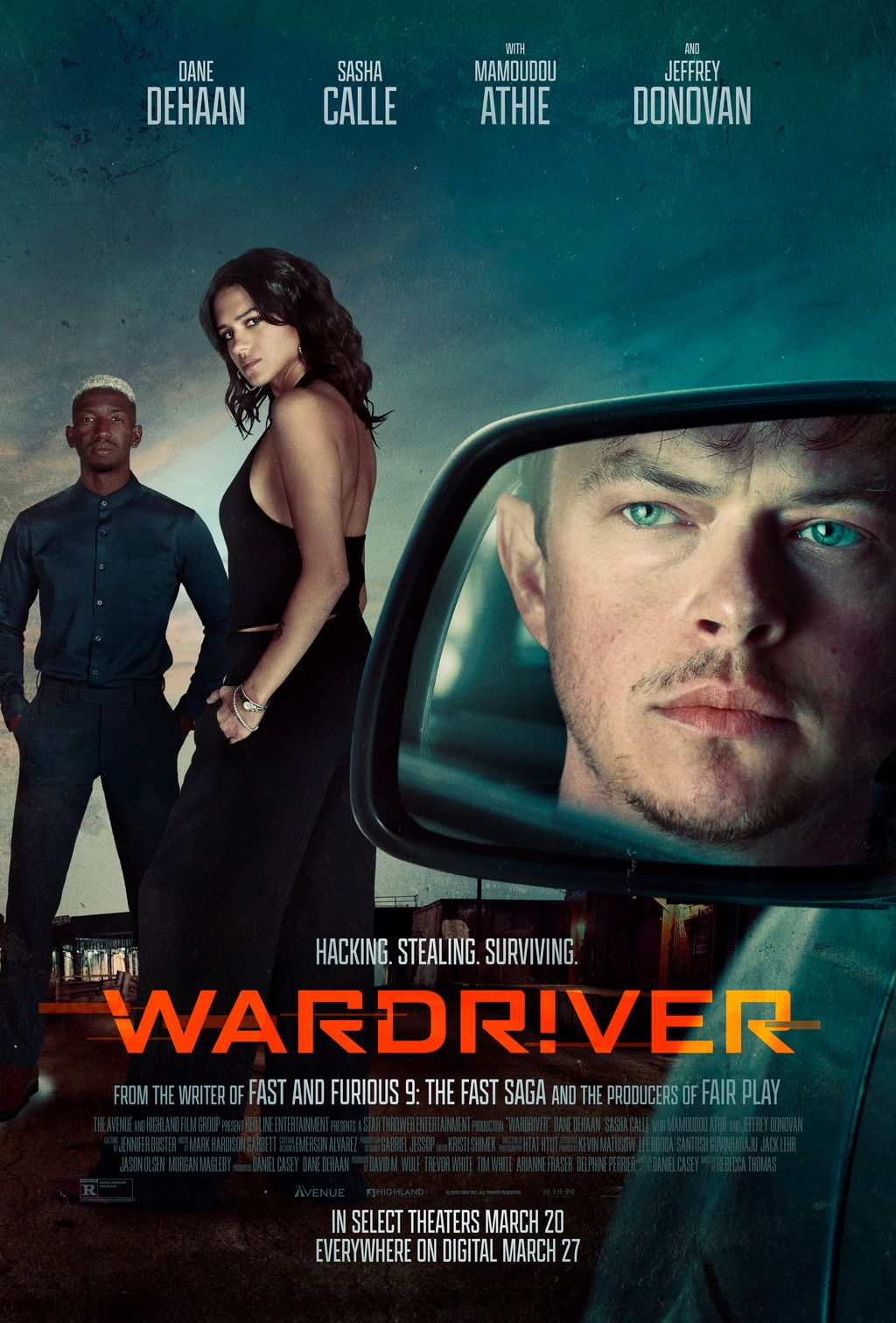
Dragged into a million-dollar cyber-heist, Cole finds himself targeting Sarah, a woman whose stolen fortune makes her a pawn in a deadly game. The deeper he’s pulled, the more violent the fallout—explosive showdowns and a mob-connected lawyer (Jeffrey Donovan) who will kill to protect his empire.
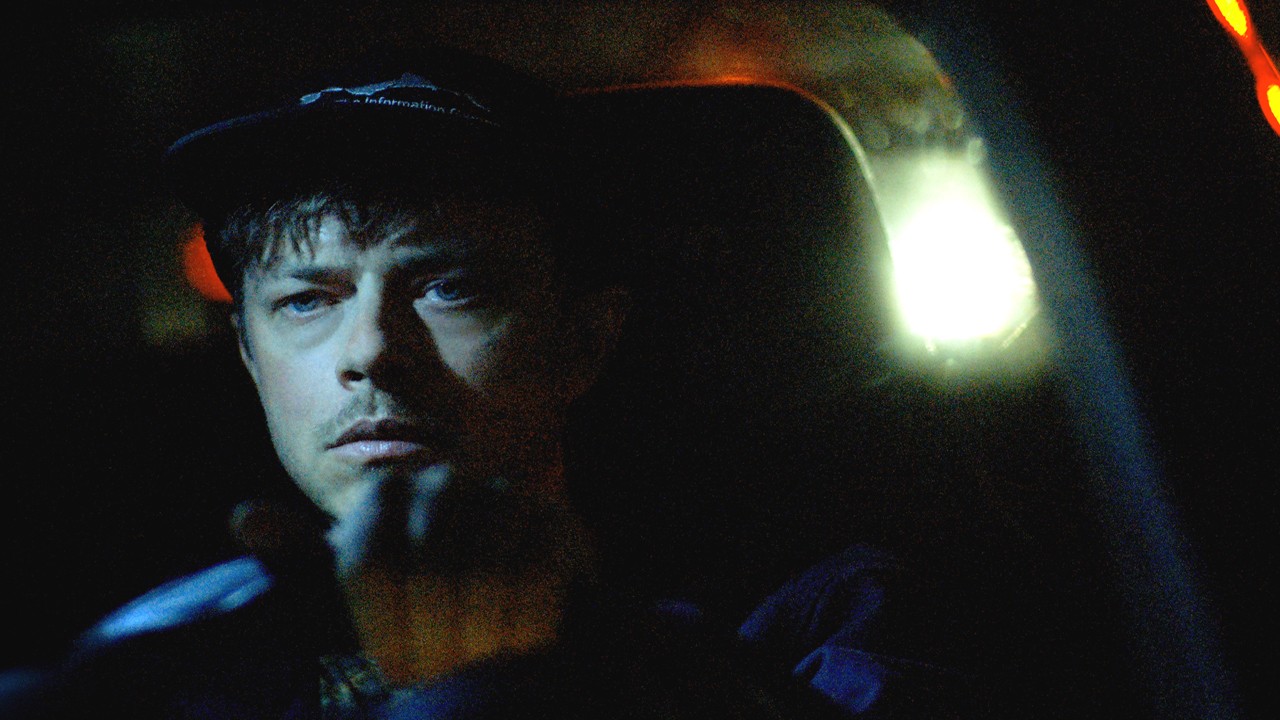
Wardrivers are basically mobile hackers. Driving around, scanning for networks that are vulnerable, and exploiting them for various exploits. Cole is a wardriver, but he’s got a code. He doesn’t go after individuals, just banks and institutions that have their own levels of protection. He’s also somewhat of a Robin Hood. Looking out for people who may be having some hard luck, or who just need a bag of tater tots.
Cole gets in trouble, first being threatened into breaking his rule about hacking individuals. And then he starts to feel for the person he’s exploited. He gets drawn into their story, and starts trying to get them out of the problems he’s responsible for causing. Dane Dehaan plays the somewhat solitary Cole. He masterfully giving us just enough to understand his motivation. But keeps a reserve, not letting us too far into his deeper thought processes. This movie happens on several levels, but I’m not going to spoil exactly how that matters.
But we are looking at a story where everyone is at least a bit dirty. And some make mistakes that cause them to spiral deeper and deeper into troubles with no easy way out. It’s a tense film, to be sure, but it draws you into the spiral wondering what’s going to happen next.
The view into the world of the wardriver is interesting in and of itself. Cole has some mastery in his skills that are intriguing and a little scary to watch. Hopefully viewers will come out of the movie understanding that they need to learn more about security on the internet. Even if not they’re not exactly sure of the specifics necessary to protect themselves.
If you like Coen Brothers–style crime capers, where the ramifications get up-close and personal, you’ll enjoy this tightly written, tense and surprisingly good film.
Recommended.
Showings
Sat Mar 14th 9:30 PM California Theatre, San Jose
Mon Mar 16 11:30 AM Alamo Drafthouse Cinema (Screen 3), Mtn View
Wardriver will be available in theaters March 20th and everywhere on digital March 27th.
Regal but weary, Nora Neily is deeply resentful about being abandoned by her frustrated, guilt-ridden son, Kenny. When he drops Nora off, she’s sure her life is pretty much done. Then, her spunky former acquaintance Edna Buchanan wheels in and reminds her that she’s still got a heck of a lot of living to do.
Nora Neily is deeply resentful of being dropped off at the Shady Rest Retirement Home. But spunky resident Edna Buchanan has other ideas! Edna is loud and brash and tells everyone “I slept with your husband!” But she and Nora become friends, sharing stories, quilts, and booze. Edna tells Nora many stories that seem like they can’t be true, including that she was in a circus and performed “dancing on the elephant.”
There are several scenes where Nora tries to get them to escape from Shady Rest, only to be foiled by circumstances. Eventually Edna’s dementia worsens and prevents the escapades, but not the friendship.
This movie is both funny and sad, but shares the story of a friendship forged in the shared determination to age with dignity and humor. The movie is based on a play written by Lisa Hagen and she is also the screenwriter. It was filmed in Nova Scotia and most of the cast are Canadians.
My grandmother lived in a similar retirement home for many years and I often had lunch with her there, along with her regular “gang” of friends. Although none of them were as outrageous as Edna, it is good to have friends all along the way in life. I think she would have enjoyed this movie, as did I.
Recommended
Showings
Sat. March 14 at 2:30 p.m. at Alamo Drafthouse in Mountain View
In In Spite of Ourselves, a collision of contrasts sparks when Archie, a comedian whose life is colored by grief and unresolved struggles, meets Hannah, a baker whose warmth is matched by her hesitation to let others in. When these two worlds meet in a cozy Portland hotel, sparks fly—not just romantic, but emotional, illuminating the beauty and complexity of real-life love.
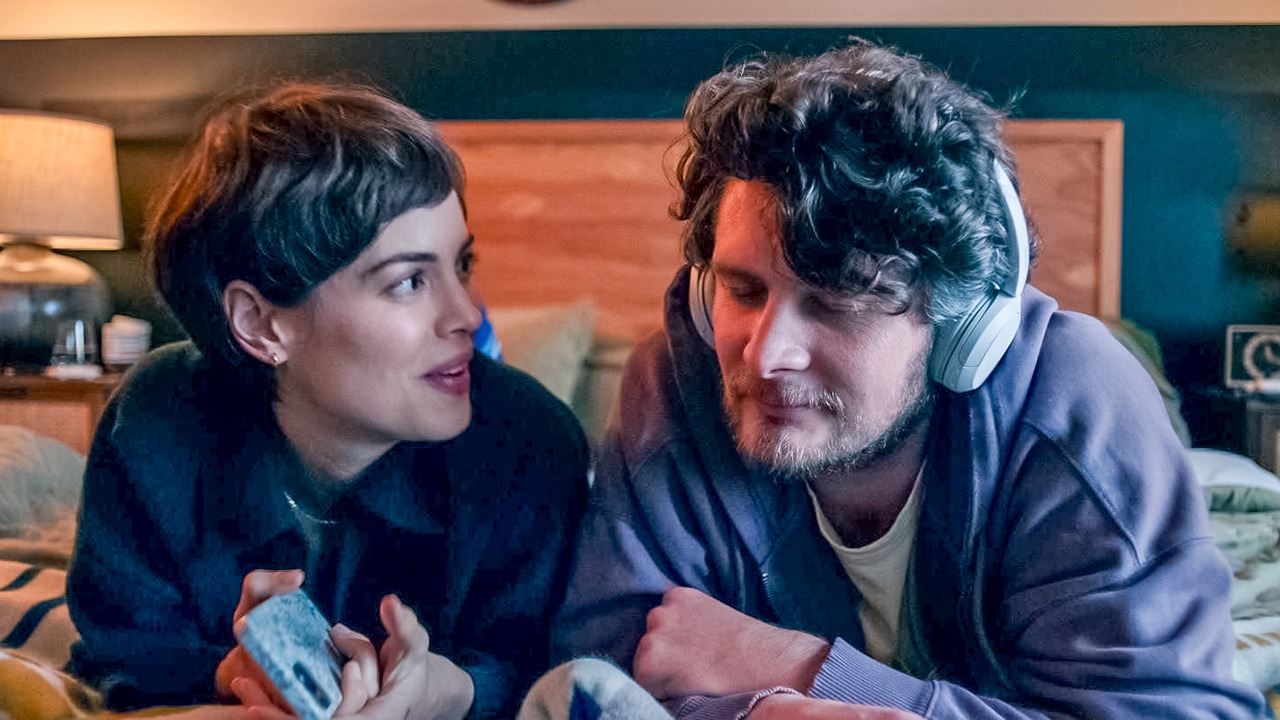
It all started with a really delicious cinnamon roll. Archie met Hannah at her bakery in Portland, Oregon when he was there to do a comedy show. They have a few dates and realize that they have a real connection. But Archie lives in Los Angeles and on the road making a living at comedy. They do manage to see each other a few times over several months.
This movie felt very realistic with adults going through traumas, fears, long distances, and being on completely different sleep schedules; bakers get up at 3 a.m. and comedians go to bed at 1 a.m.
And the movie ends with a sweet gesture from Archie to Hannah.
I enjoyed the relationship between Hannah and Archie in all of its messy realness. Although it started with a cinnamon roll, the movie was not Hallmark sweet and had real issues to overcome. I think it would probably be rated PG-13, so no explicit sex scenes. It was actually filmed in Portland and I could tell.
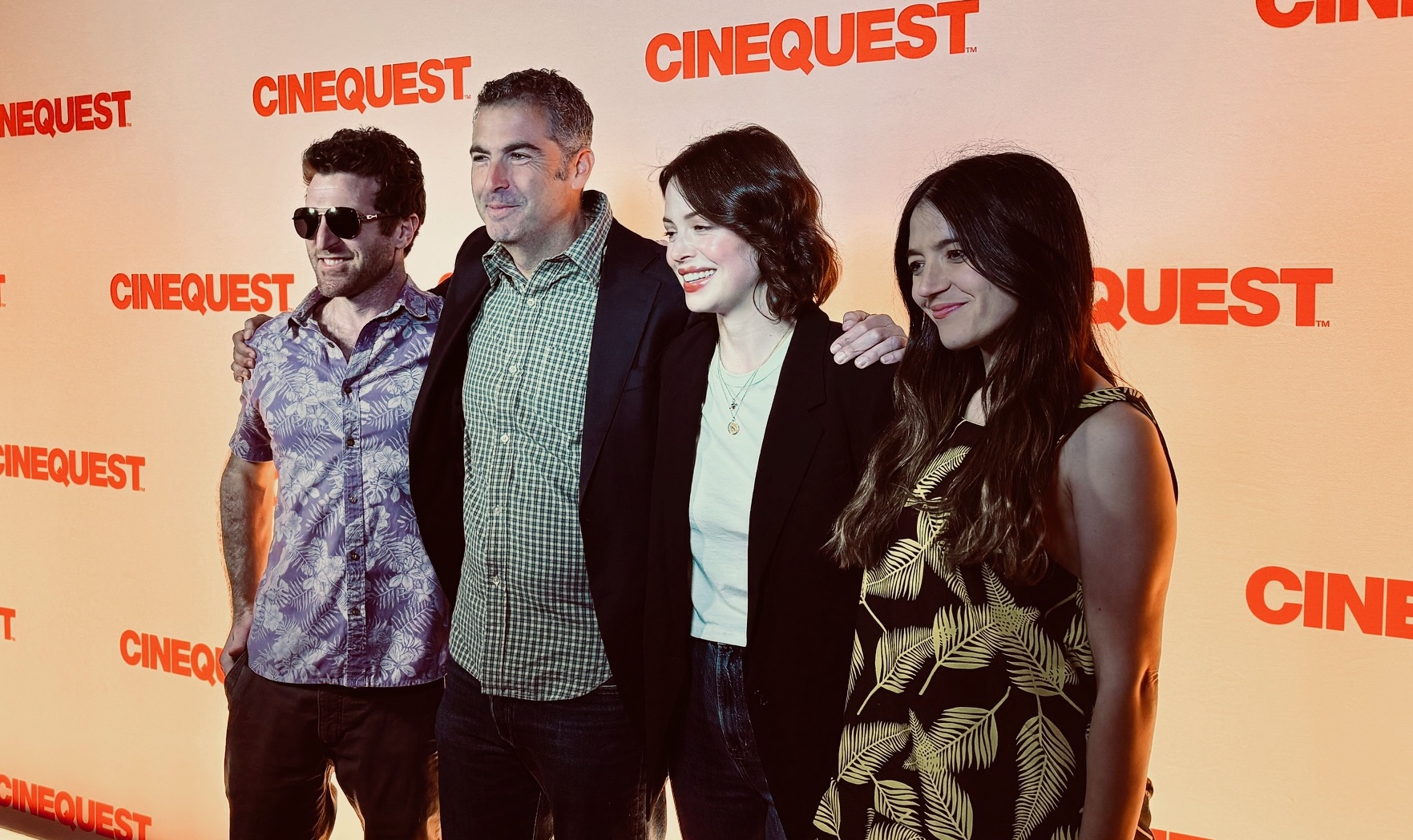
Cinequest had the World Premiere for In Spite of Ourselves and Josh Loeb, Director and Screenwriter, and several of the actors attended the showing and did a Q and A after the showing.
Recommended.
Showings
Monday, March 16 at 4:50 p.m. at Alamo Drafthouse in Mountain View
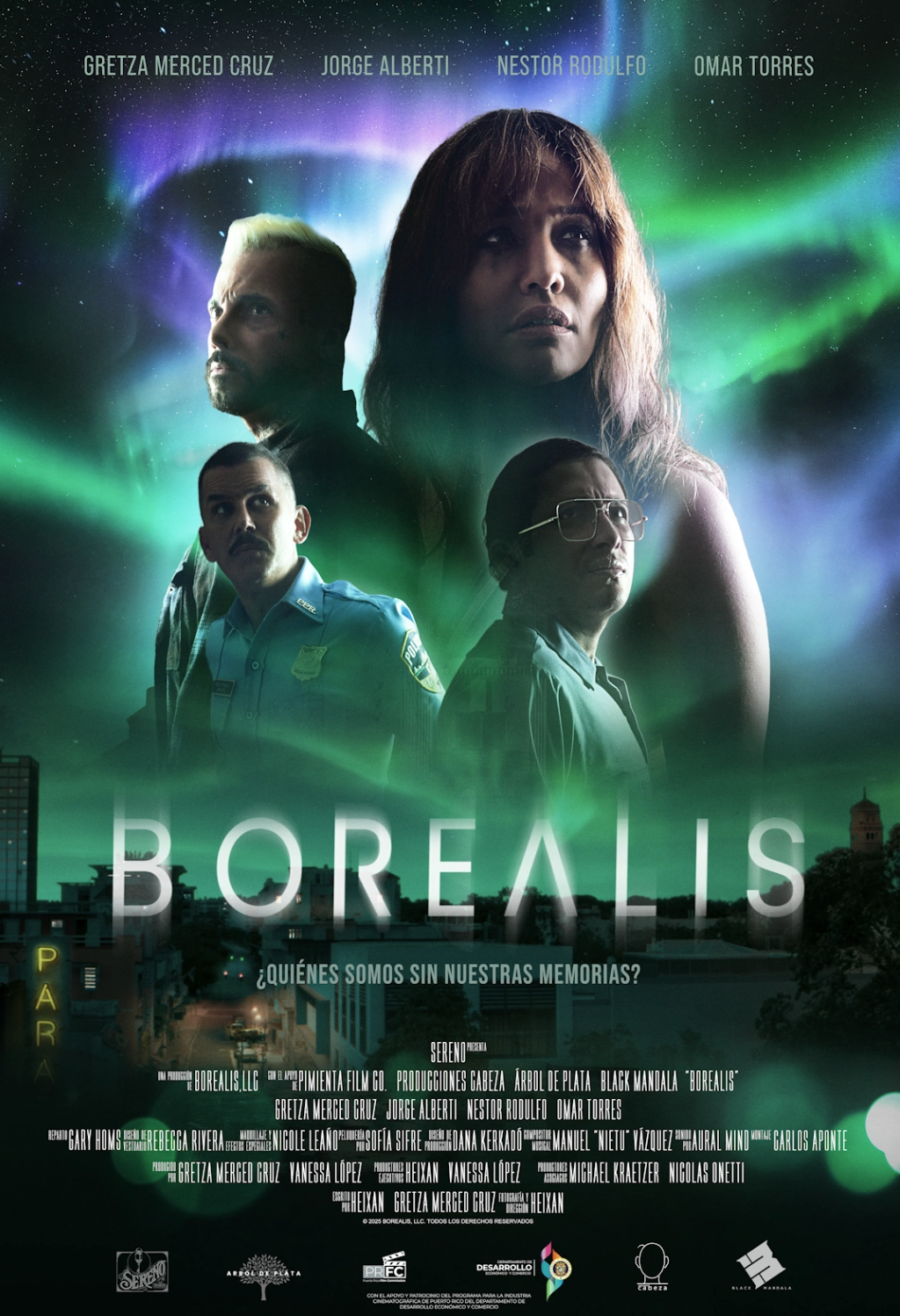
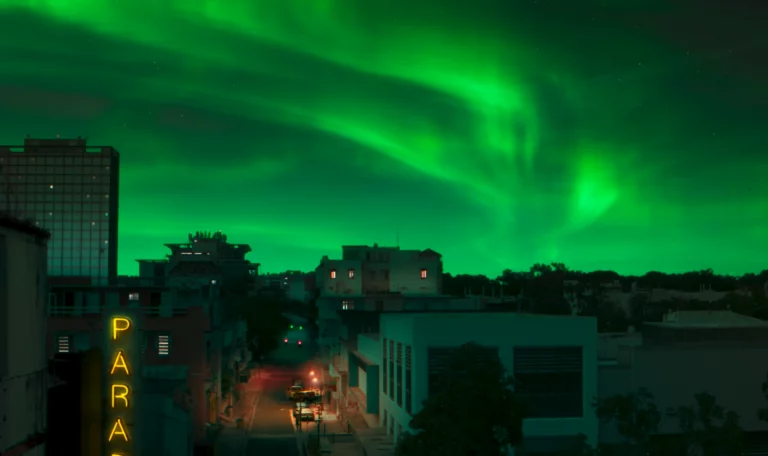
A solar flare tears across the sky and in a blinding instant, every memory on Earth is gone. Civilization collapses overnight as governments scramble to seize control of a population reduced to instinct. Power vacuums ignite. New regimes rise.
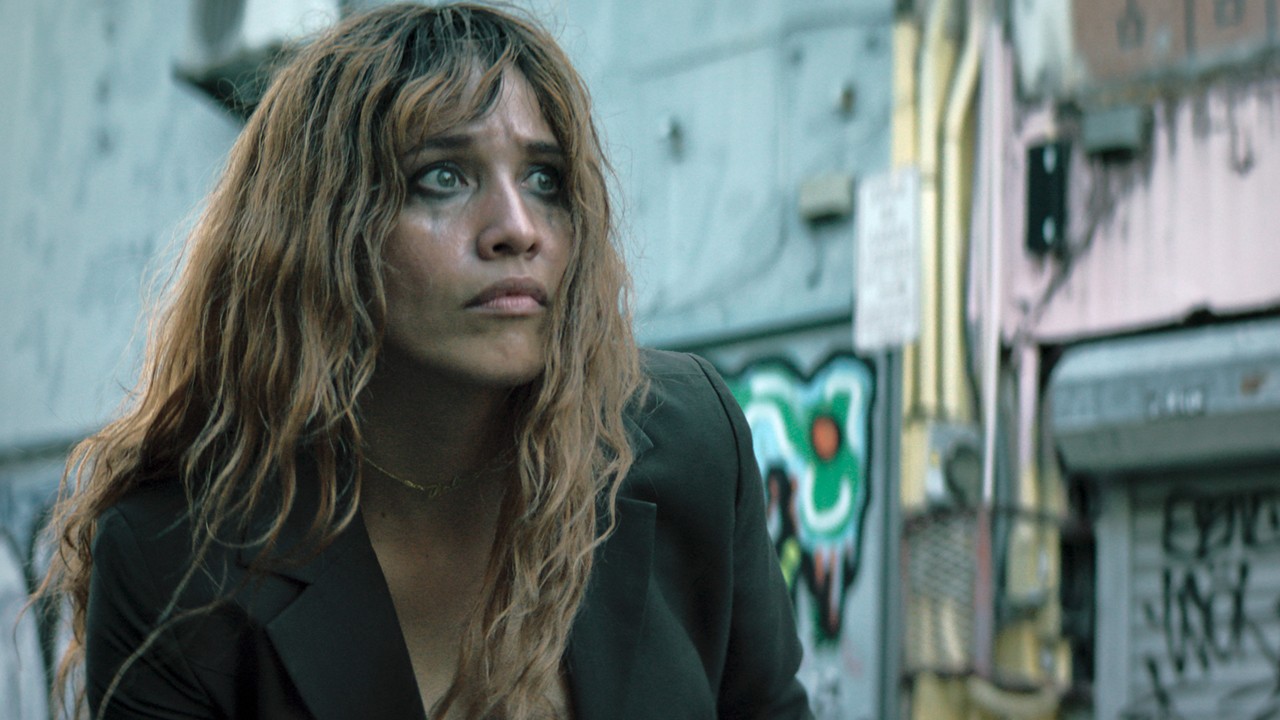
Thalía wakes in the wreckage with nothing but a scar etched into her skin and a conviction that defies logic: somewhere in this erased world, her daughter is alive. She has no proof. No memory of the child. No memory of herself. But the certainty burns.
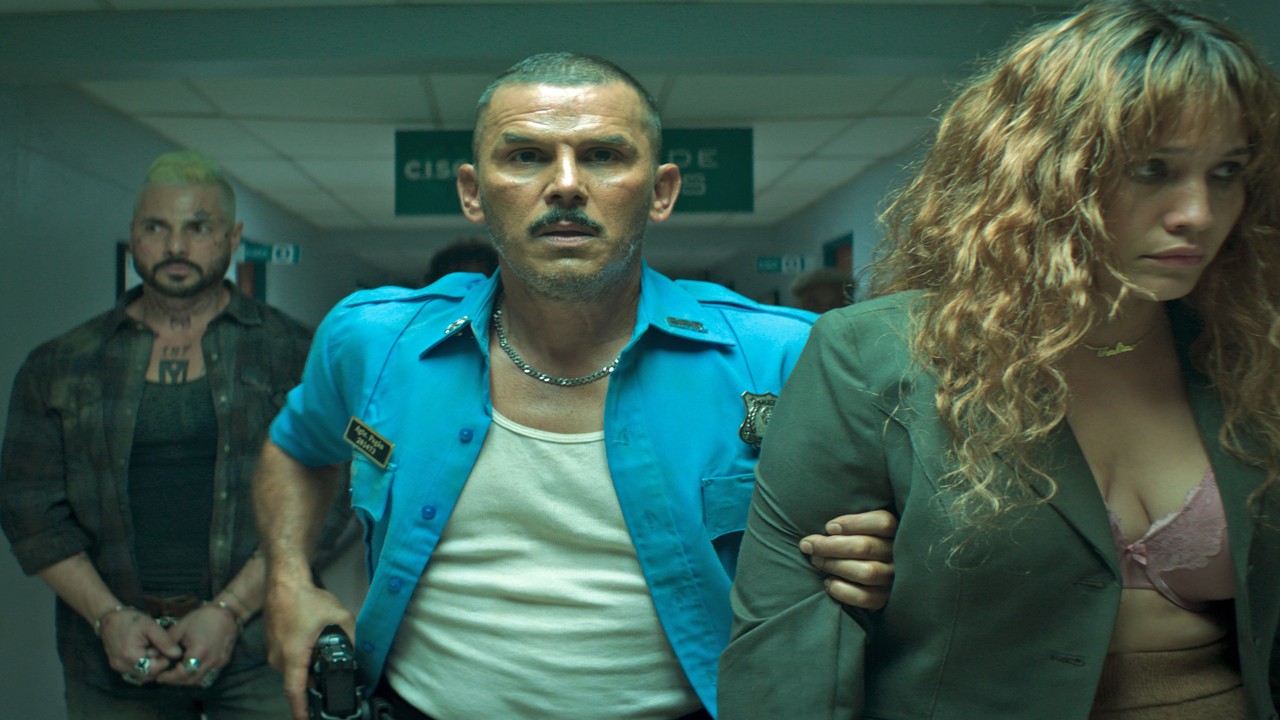
Borealis is another exemplary find by the programming team at Cinequest. With minimal special effects, it tells a chilling and thought provoking story of a world where everyone is fundamentally changed in an instant.
The otherworldly aspects of the story are told in a few minutes, and the core story is about the very human survivors. So many apocalyptical tales begin in such a manner, but few are as insightfully personal as Borealis.
In the aftermath of a celestial event, the world’s population is left with no memory of who they are, what they were, or who they may have known. And no one is coming to “save” anyone, because this is apparently the new state of the world.
We focus on a small group of survivors, all awakening to this new reality. They scramble for clues in their own pockets and things nearby, but the answers there are of course incomplete and unsatisfying. Is the man in the police uniform a trustworthy public servant, or perhaps a monster in his own way. And the man with the bloodied hands and tattoos, is he an escaped criminal or just a victim himself.
Good science fiction is not limited to dealing with future technology, flashy special effects or alien makeup. The best of it focuses the human experience into distinct elements that the storyteller can manipulate and examine to expose more about the human condition. This is exactly the kind of high concept storytelling that raises the genre above simple rocket ships and ray guns.
To be sure, Borealis is an exciting story with a lot of action and conflict. But it’s also a story about understanding what creates a person, a personality, and their individuality. This is the nature Vs nurture argument stripped down to its essentials.
Here we can watch each person’s growth on a case-by-case basis. Is the man in the police uniform naturally a power-hungry authoritarian, or is he that way just because he has the only gun? Why is the thuggish-looking guy the voice of reason? And why is the drug-addicted woman so concerned about finding the girl who may or may not be her child? Motivations and conflict becomes much more complex when the players can’t explain, even to themselves, why they’re doing what they’re doing.
Borealis lets us watch the “newborn” survivors as they test each other, try to gain strength and develop community, and deal with betrayal and manipulation along the way. It gives us plenty to ponder; how experience, memory, and our environment all contribute our individual beings. Are we prisoners of our past, or can we create something better if it is stripped away? You may not find the answers here, but you will find new ways to think about it.
Highly recommended.
Showings
Fri, Mar 13 7:15 PM Hammer Theater Center, San Jose
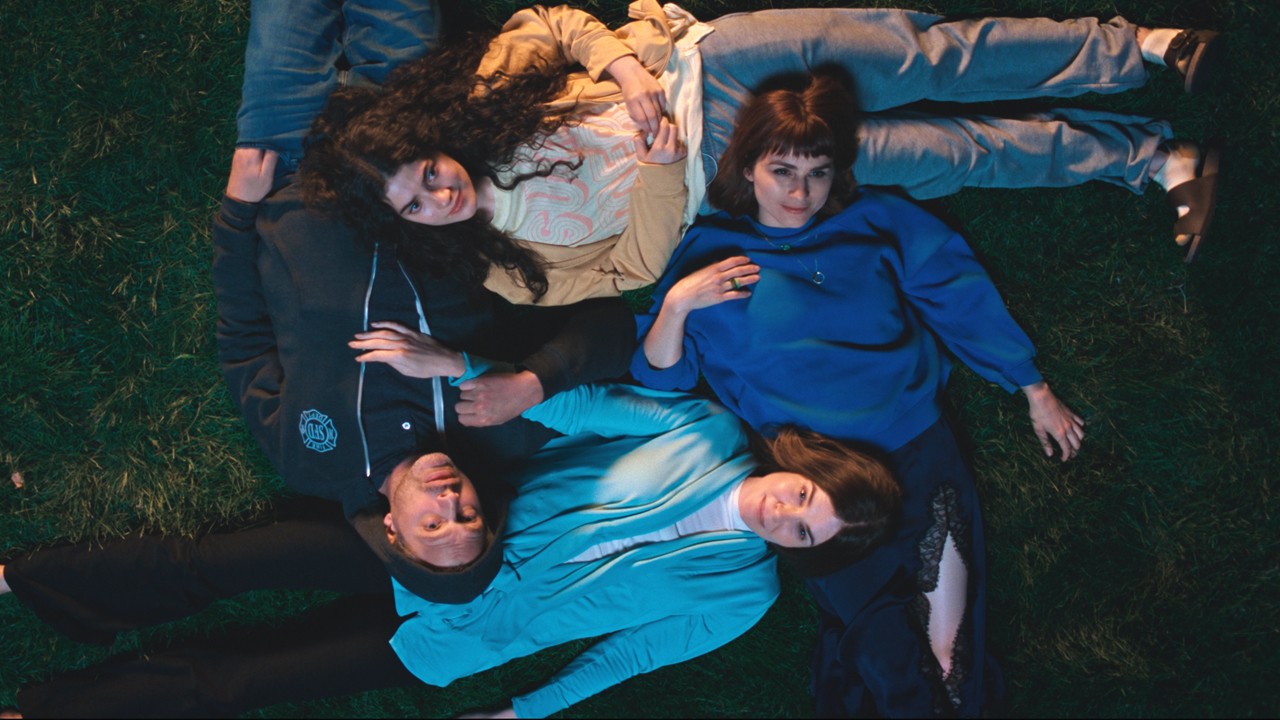
This sharp and hilarious ensemble comedy follows 17-year-old Morgan, who jumps at a rare chance to spend time with her much older siblings—hoping they’ll reveal what it truly means to be an adult. Instead, she discovers they’re all just faking it.
Cinequest grouped Adult Children in the Comedy section of their events. Although there were some amusing parts of this movie, it is more of a Dark Comedy, with serious issues from real life that aren’t easy to laugh away.
It is an interesting slice- of-life movie about 3 siblings who grew up together and a much younger stepsister who feels she doesn’t really know them. For various reasons all 3 of the older siblings come home to stay for several weeks. All are going through difficult periods in their lives.
The stepsister is 17 year old Morgan who needs to write her college application essay. She needs 3 words that describe her. She is having trouble with that. Given the options of going on an European vacation with her parents or staying home with her adult siblings, she chooses staying home. Morgan hopes to become closer to the siblings and also learn how they deal with real life. Of course she discovers that just because you are adult doesn’t mean you don’t have serious problems.
But in learning how they deal with these issues helps Morgan deal with her own.
I found the movie engaging and moving. Finding a family within the family you were never really in touch with, and finally coming to terms with shared and personal problems. This is a different type of comedy, but in the end I came out really enjoying my time spent with this family.
The film takes place in the rural area of Catane in Hungary, and is lovingly filmed with beautiful views of the countryside. Screenwriter and Director Ioana Mischie took 12 years to bring this film together and the US Premiere is at Cinequest. It is in Romanian with English subtitles.
I was going to write a full review here, but was really impressed with the Cinequest write-up from their catalog. I include it below for specifics and particulars about the film. In any case, I highly recommend Catane.
Riotously inventive, hilarious, and brimming with charm, Catane invites audiences into a world where bureaucracy collides with community ingenuity. In this remote Romanian village, every resident is “disabled”—on paper, at least—an absurd system that has long kept the town afloat. When a government inquiry of three people threatens to expose their cleverly constructed safety net, the villagers spring into action with audacity, humor, and a collective flair for the ridiculous.
Led by a colorful ensemble including the mayor, the dispensary assistant, and an extraordinary group of townspeople, Catane transforms an impending investigation into a dazzling exercise in creativity and resistance. From clever diversions to outlandish improvisations, the villagers turn every obstacle into an opportunity, blurring the lines between cunning, survival, and pure comedic artistry.
At once a celebration of human ingenuity and an affectionate satire of the absurdities of modern life, Catane delivers laughter, warmth, and heart. It is a whimsical, joyous reminder that even in the tightest of circumstances, creativity, courage, and a sense of humor can turn the impossible into something unforgettable.
Highly Recommended
Showings
Wed, Mar 11 4:50 PMHammer Theatre Center, San Jose
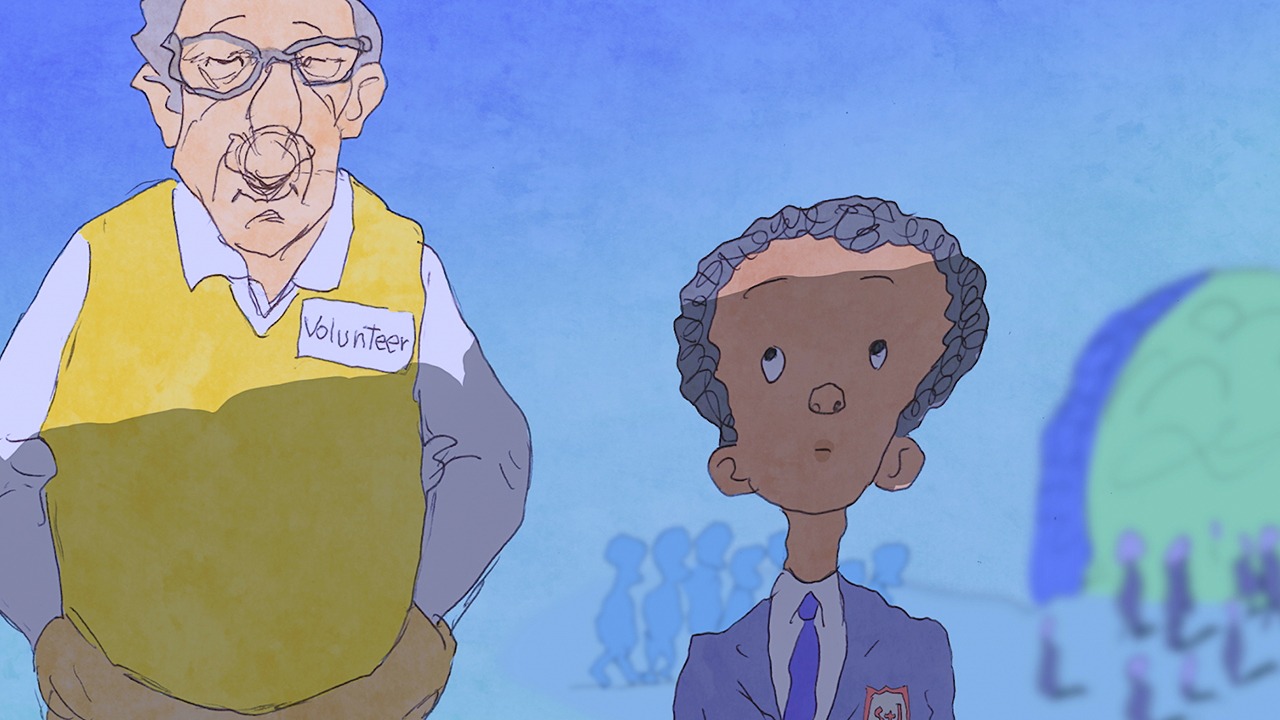
Cinequest’s commitment to showcasing the best animation in the world comes to life in this collection of 21 films from 11 countries. Traditional hand-drawn works from world-renowned animators share the screen with striking computer animation and lovely stop-motion gems from longtime Cinequest favorites and exciting new voices.
Film festival shorts programs are some of my favorite and least favorite things to review, and they can be problematic for the reader of the review. It’s my hope that this review will be valuable long after this year’s Cinequest ends. But it’s unlikely the group of films will be played together again, or that names of short films will stick with the reader.
But I want to give you a taste of what the shorts programs can provide, so is one of a series of review snapshots. Nearly every film in the Animated Worlds program, and not an expansive examination. If you’re interested, you should go to the listing in the Cinequest catalog and read more.
So with that said, let’s peep in on some of these short animated films.
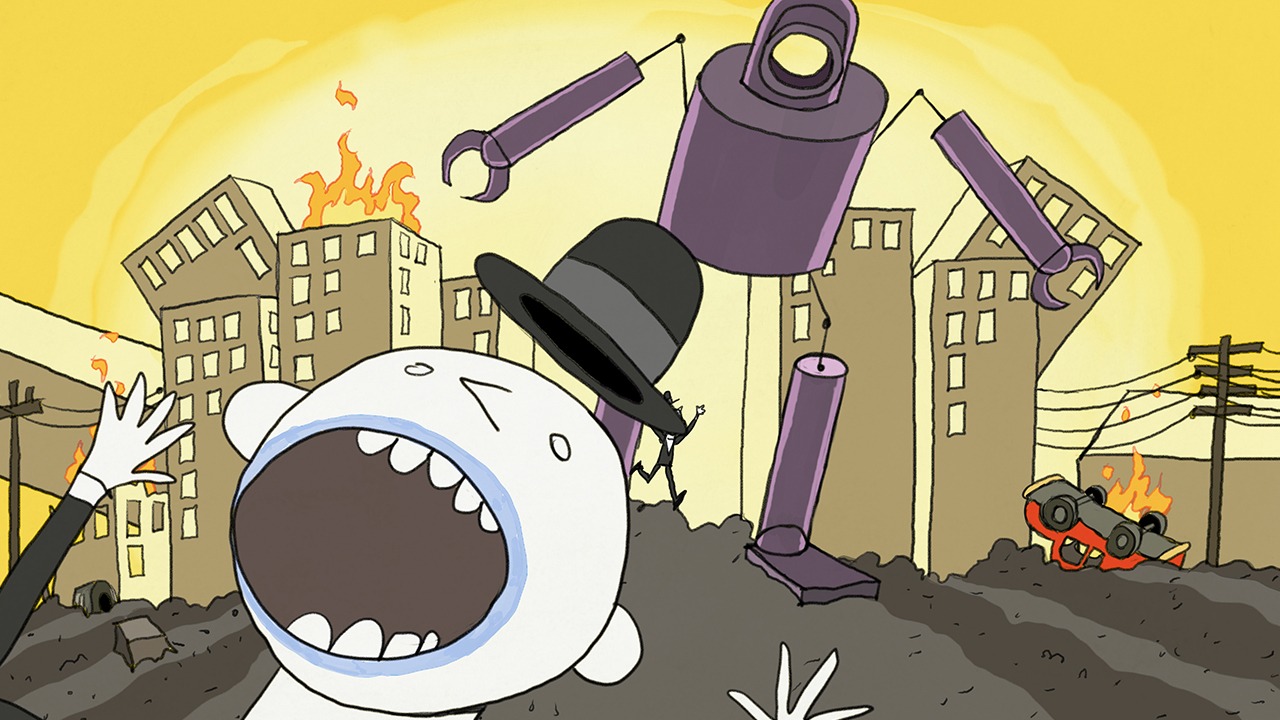
Alienated – What’s the difference between a sacrifice and a hero? Does it really matter? We’re faced with a community under an unusual siege, and they definitely choose the wrong guy to tend to it. It’s a frantic confrontation with a number of interesting segments… ending up with full frontal nudity. (Maybe I’m kidding about that.) Watch for a couple of scenes where the animation is helped along by a guest appearance of “real life.” Fun and short, worthy.
Alyssum – Nice to see a local production, the San Jose State University Animation and Illustration program are credited for production facilities, so I’m gonna assume the folks that created Alyssum are similarly local. Good job folks.
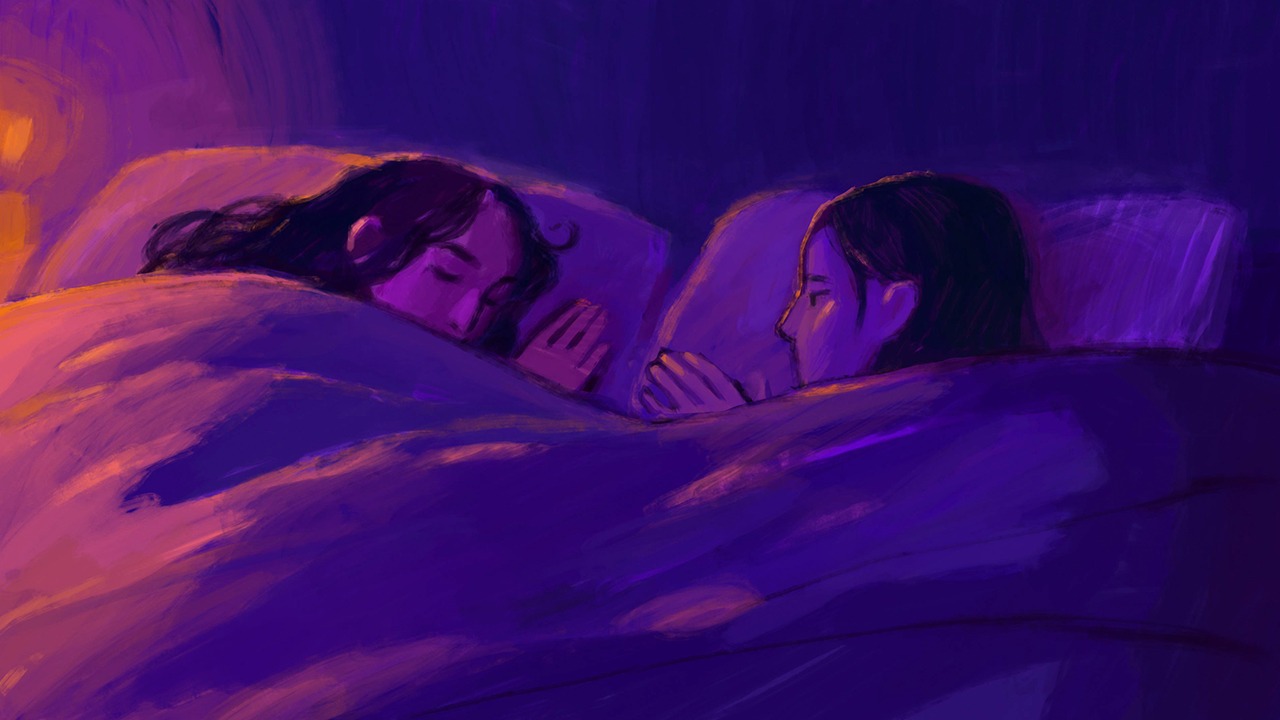
Alyssum is fairly simple with some allegories to things like not feeling worthy, not creating something good enough, and even being corrupted by failed attempts. But the simplest of things can sow you that you are both worthy and appreciated. A lovely film.
Awaiting the Lightning Bolt – A nicely done bit of stop motion animation, very clean and lovely. A simple story of a father trying to catch a lightning bolt, with all the attempts and failures along the way running somewhat like the Coyote trying to catch the Road Runner. But when we find out why he’s so motivated, the story takes a very personal turn. The line of Italian at the end is easily translated on your phone, but don’t do so until after your viewing: “questo fulmine è per te.”
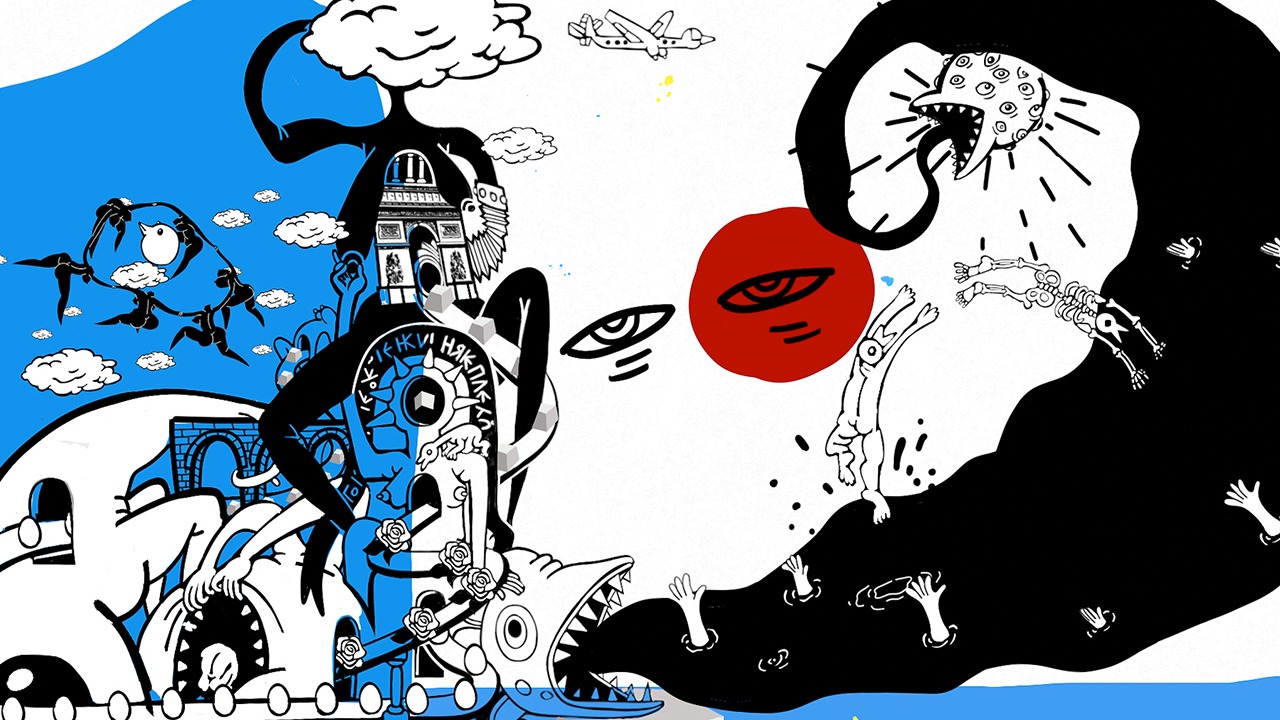
Disturbia – A hypnotic journey through a constantly morphing set of scenes and abstract characters. The animation was reminiscent of a lot of Bill Plympton’s abstract animations (also included in this collection.) The art is amazing, intricate, raw, primal/modern. Mostly black and white line drawings splashed, sometimes literally, with color. I suspect that five viewings would continue to expose somethings that you failed to notice in the first four, and that five different people would come up with five different stories to explain what’s going on here, I would only care to say that the end gives new meaning to “get your head on straight.”
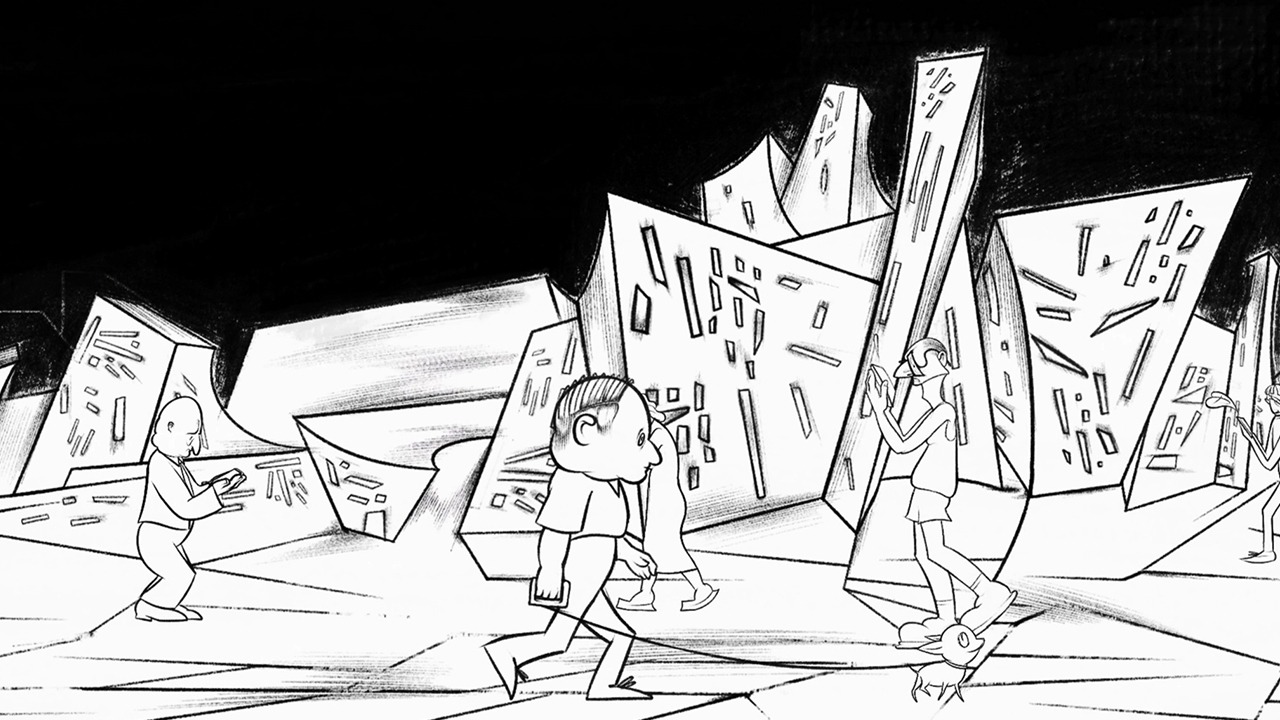
Dobrina – An inventive animation style that mixed two renderings. The figures were all in dark black inks, flat, in a manner that for me evoked Picasso’s inks, but with a bolder, darker flavor. The scenery was more like chalk or pastels, drawing out a small town on the edge of a desert. The juxtaposition there worked well for me. The story is a basic love triangle, a lovely woman in a relationship with one man, and a suitor compelled to pursue her. Everything is basic, but wonderfully animated. The story told in pictures and the song Dobrina was evocative of a music video.
Duckville – A fable about a town full of ducks who want the king to visit their town. Animated, written and produced by the legendary Bill Plympton, with narration by the legendary Jim Dale. A relatively simple story, fable, fairy tale, what have you, that is fun for just about any viewer who likes ducks, monsters, fish driving tanks, and puff pastries.
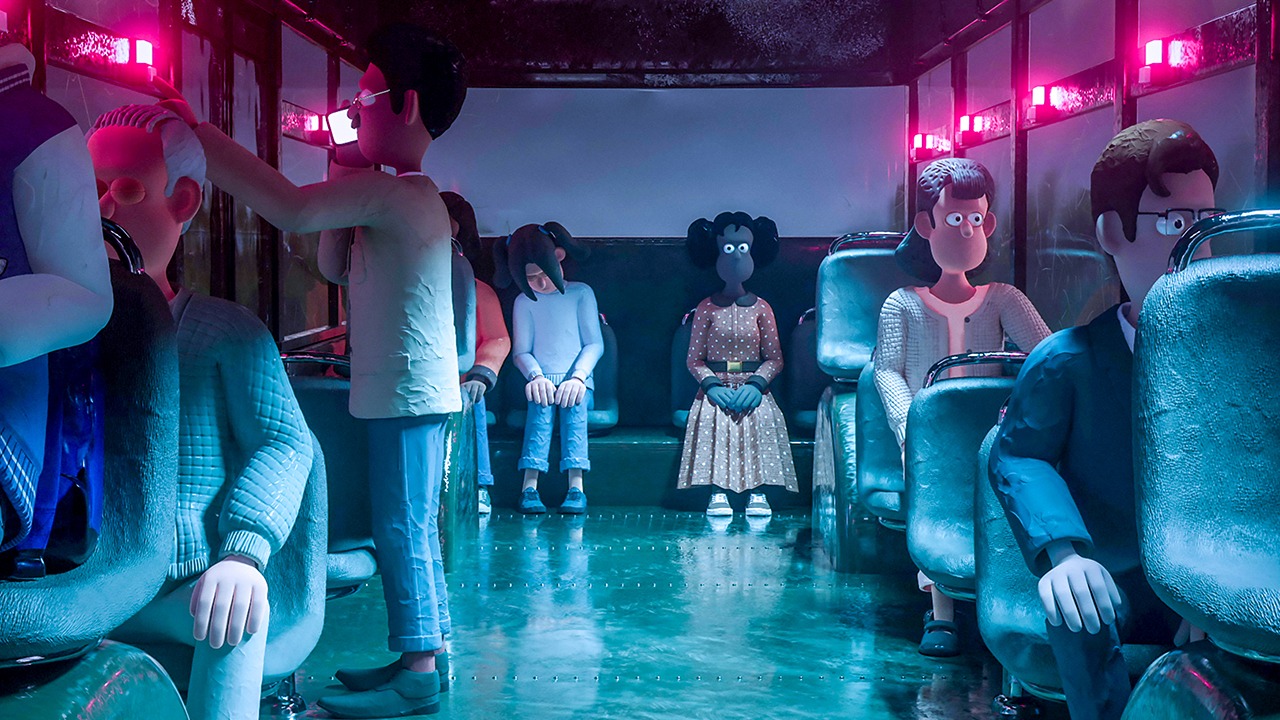
Empty Can! – A bus. A load of passengers. And crushed soft drink can which becomes the stimulus, instigator, motivator, symbol, and so many other aspects of a collection of set scenes. From sports conflict, to a rebel invasion, to communion in a cathedral, the passengers, bus, and can serve the craziest set of improv you might imagine. And yes, the stop motion animation is flawless.
Good Luck to You All – A fine flat animation of the evolution of an AI, from sublime to terrifying and then on to…. well that would be telling. The background is a series of short statements, a disconnected conversation about AI, featuring scientifically literate voices, generally worried folks, and a small child. A fun little film, providing you don’t think about it too much.
In Captivity of a Finger – An animated selection of sketch studies, some looping animations with unexpected and unexplained conflict. Sit back, relax, and just enjoy. It will be over soon.
Little Shrew (Snowflake) – If there was one film that makes this a “can’t miss” program, Little Shrew(Snowflake) is it. This is a lovely film about fragility and destruction. I’ll say no more by way of review other than to try to convince you to take this opportunity to see it on a big screen instead of your phone.
I didn’t know the film’s origin before viewing it and was struck by how much it reminded me of Robert Burns timeless poem “To a Mouse, on Turning Her up in Her Nest with the Plough.” While an admirable impression, it is so much more.
In 2022 when Russia invaded Ukraine, Kate Bush “wanted to make an anti-war animation. “In particular, I hoped to draw attention to the children caught up in war” she writes. This is that film. Again, you have an opportunity to experience it on a large screen with professional sound. Do yourself a favor. And then go to Bush’s web site to read more, as my telling would be in pale contrast.
Love Me Tender – Nice fluid line animation is always a classic look. This film captures the hunt for love from several angles, and in the end the heart wants what it wants is certainly a solution if you know what makes you happy.
I was particularly impressed by the soundtrack here. There are no special effect sounds, no real dialogue, everything is punctuated and reinforced by the instruments. It’s subtle, but once you catch onto it you’ll be that much more involved with the story and this world.
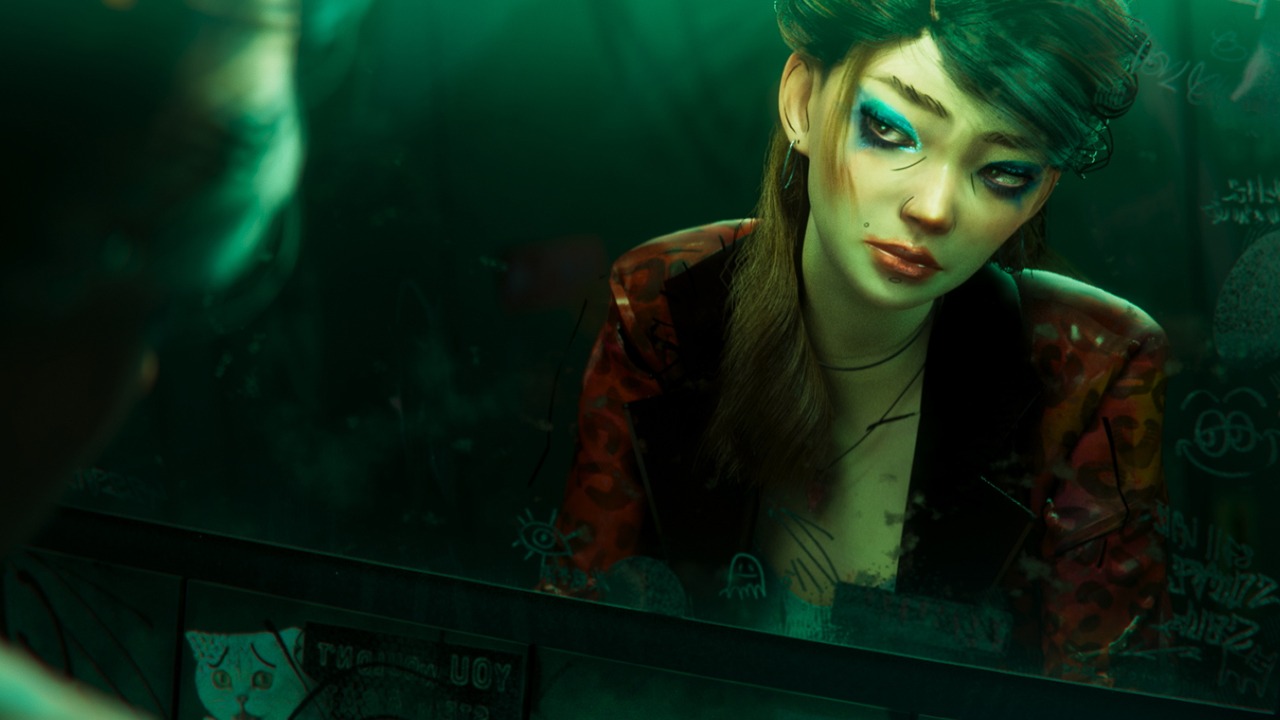
Orchid Square – The story here is of a night out during the Hungry Ghost Festival in Hong Kong, when the main character gets separated from her friends and experiences memories that haunt her. Done with traditional computer graphics techniques, this is a student project from the French ESMA school of art and design. The tools are well used, expressions and hallucinations (or are they) involved in creating the story show how a deep personal loss and guilt can persistently torture and haunt you.
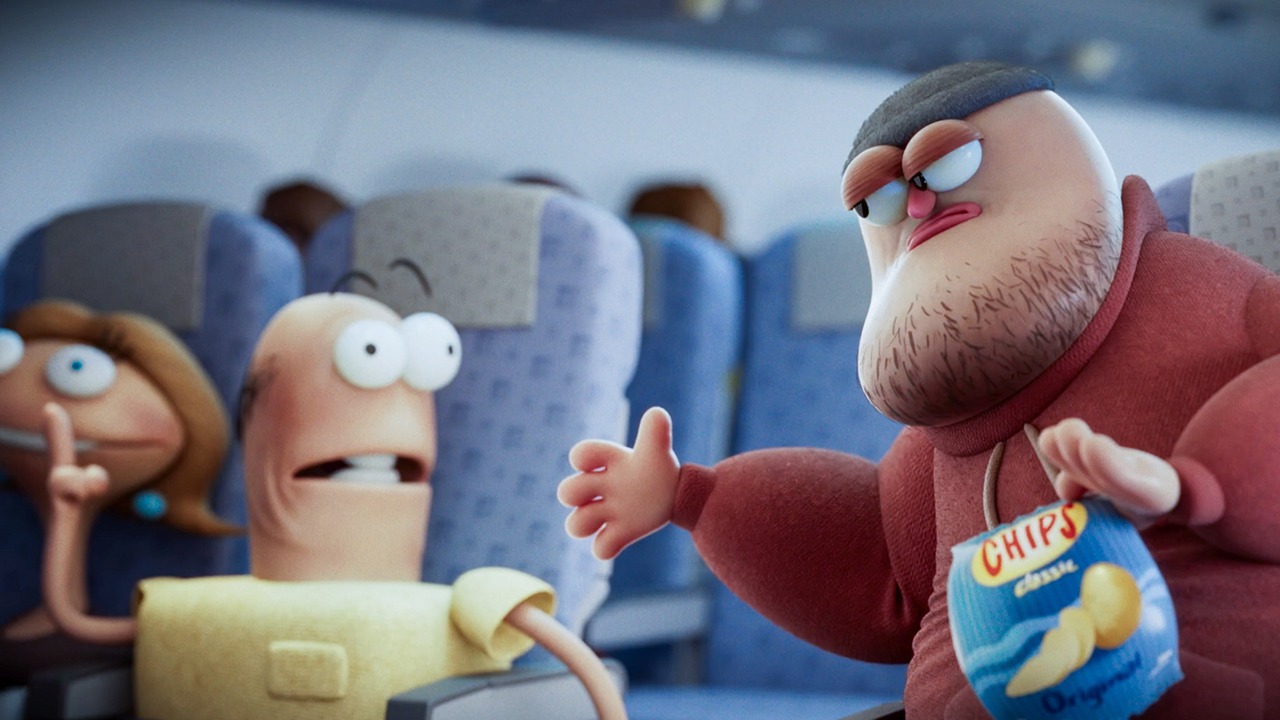
Turbulence – Nicely cute short about the terror of flying. Anyone who flies regularly will recognize all the passenger types, the comforting and not so comforting, and how many react when the flight turns out to be no so smooth. Cleanly animated and finished, the credits are fun to read as well (more than the plane information cards at least.)
Wavelength – Abstractions of tuning into communication, how it brings people together. a fairly abstract set of images tells a tale somewhat open to interpretation, with fairly inventive transitions. The vibrant chalk-like animation with a train station metaphor can stick with you.
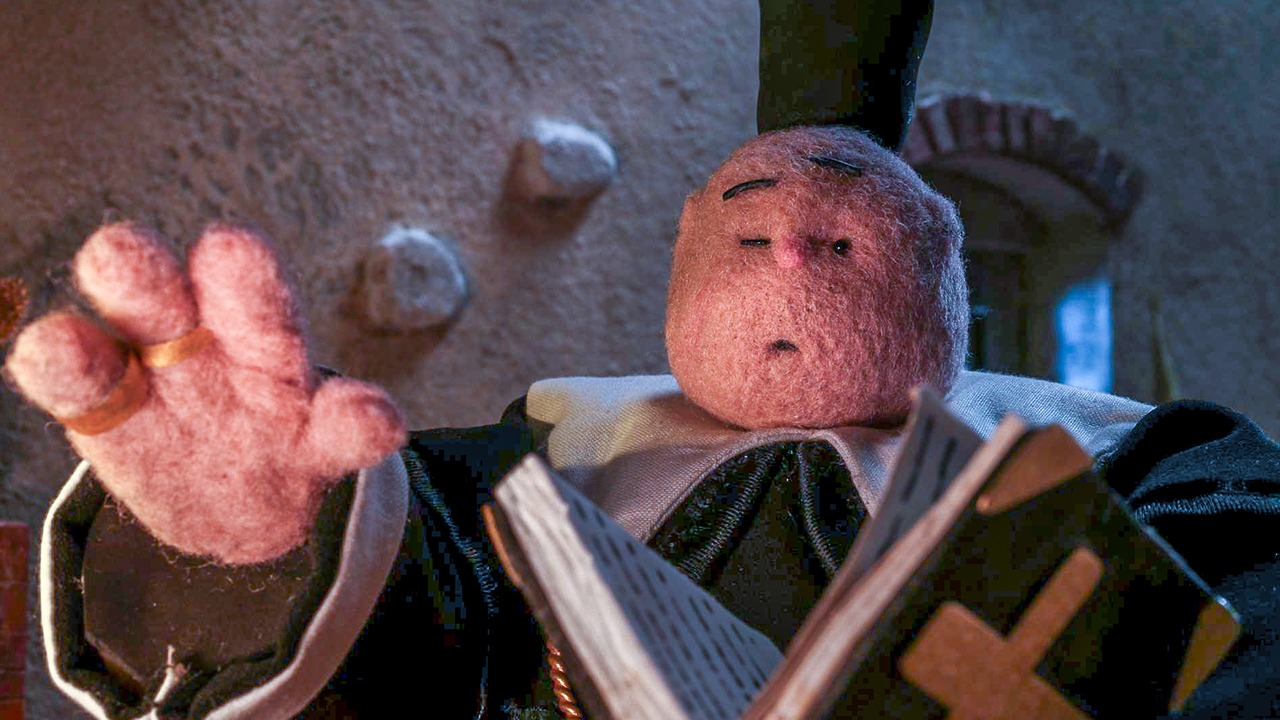
Whale 52 – Suite for Man, Boy, and Whale – From the Plympton studios, a nice set of discussions where communication is a matter of deciding how writing, reading and listening figure into this discussion of loneliness and personal image, and of the solitary whale. Surprising in it’s simplicity, with the typical Plympton calmly frenetic animation styles.
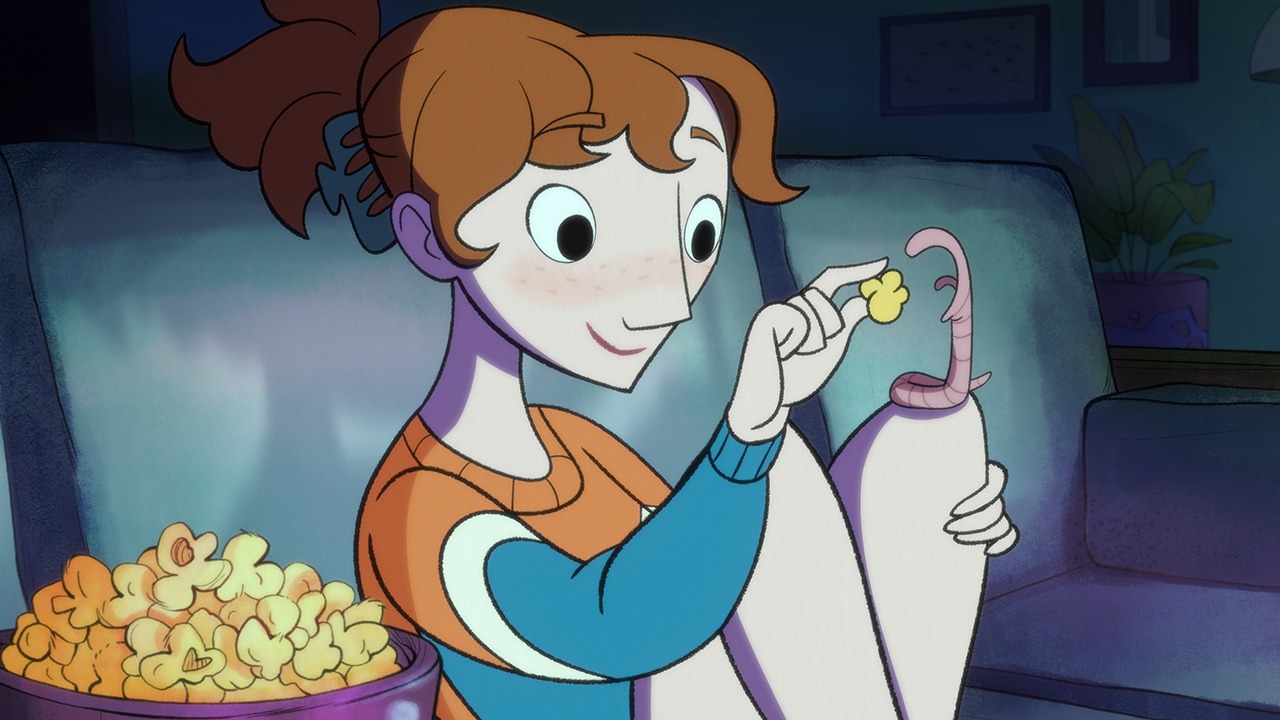
The Worm’s Eye View of the Bird – Unique exploration into the way relationships are formed and work, or don’t work. Solid animation work here. All of this speaks to an experienced director who is obviously speaking from their experience and heart.
This is a well crafted set of animation, without a weak point and several that are sure to stick with you long after you leave the theater.
Highly recommended.
Showings
Fri, Mar 13 2:35 PM Hammer Theater Center, San Jose
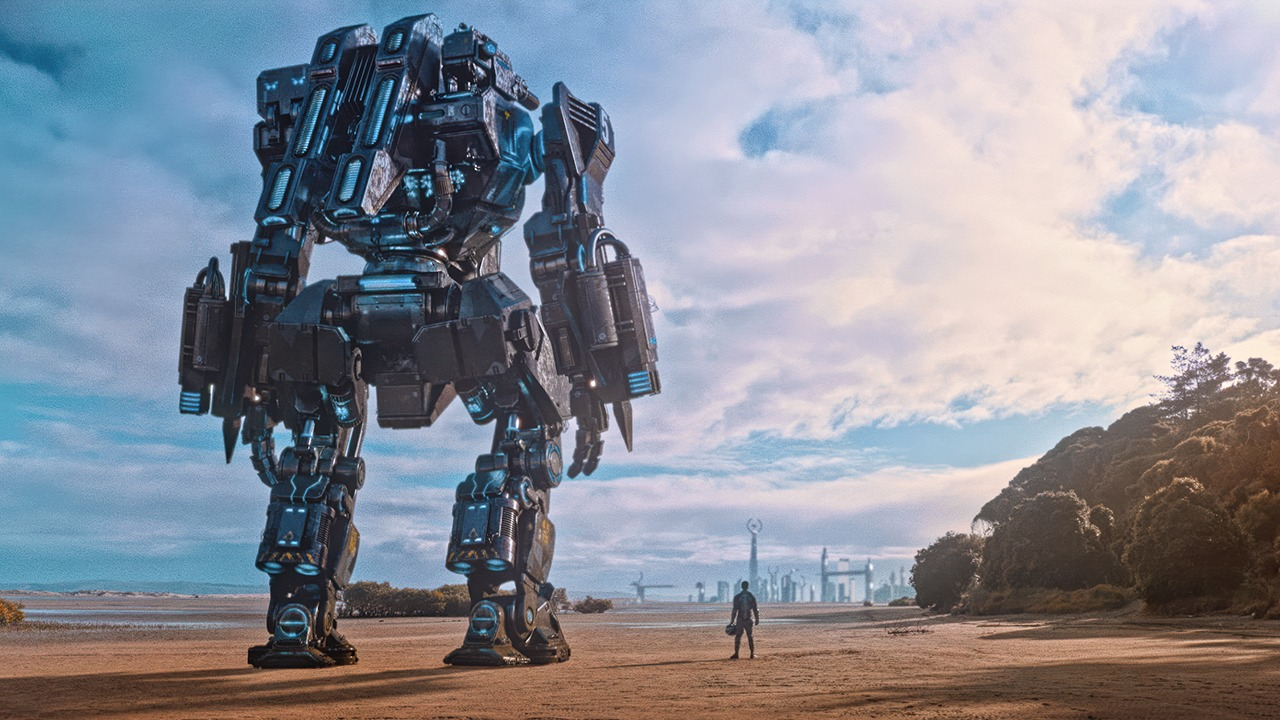
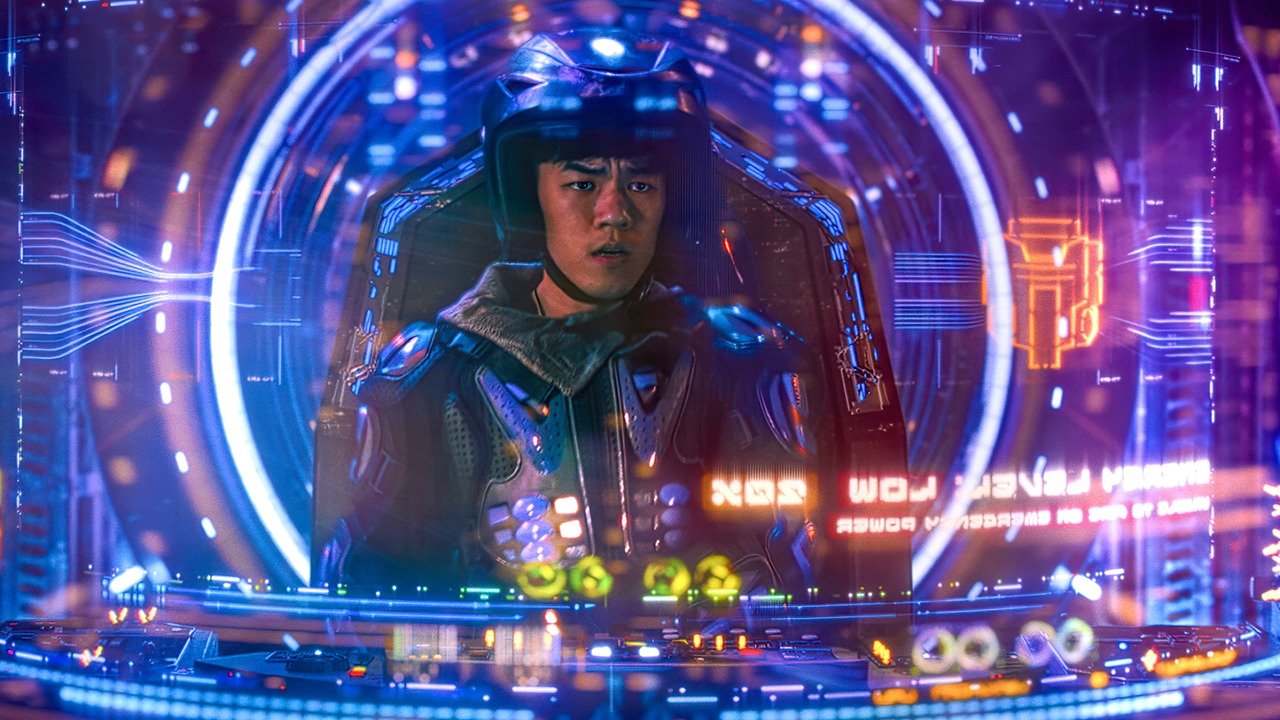
Anchored by an emotional relationship between a struggling young pilot, Kai, and his fighter robot, Little Dragon, the story follows their efforts to bring peace during a time of epic galactic warfare that tore Kai’s family apart.
We journey through the eyes of Kai, who dreams of joining the military’s elite force, the Mecha Corps, to follow in his parents’ footsteps and aid Earth’s efforts to end the war, in the hope that no other child will have to suffer the loss he endured.
Debbie often thinks I take too long to review a film, and in the spirit of cooperation she’s written her own review. Perhaps this is all you need to read:
If you like you like your science fiction to feature giant Mecha robots, then you will want to see Heavens: The Boy and His Robot. The story for this movie also has a heart-warming human element that bonds with the giant robot.
As a young child, Kai lost both of his parents as they battled the colony from Mars. Kai dreams of flying to the stars in search of his mother and so joins the Mecha Corps to train to fly a robot. But it is not all a human interest story! There are battles! In space! And stay for the after credits scenes.
It’s not common for independent film festivals to have fully developed science fiction films like Heavens: The Boy and His Robot. Mostly because for years doing effects-heavy films involving space flight, giant robots, and incredible battle sequences would have been beyond anyone’s budget. However, in the last few decades the advancement of digital special effects technology, the power to do such work is now generally available at a relatively low cost. It’s still a lot of work, but easier on your budget.
In this case, Director/Writer/Cinematographer/Actor and musical soundtrack composer Rich Ho has been working to get his film made for over a decade. Actors and crew have grown along with the film and with Ho’s vision. That vision has benefited by the digital effects technology that literally evolved alongside the film. All this has come together to create one of the more visually impressive films at the Cinequest film festival. This showing at Cinequest is its world premiere.
There are so many obvious influences here. Fans of films like Mobile Suit Gundam, Starblazers/Space Battleship Yamato, Robotech/Macross, and the Pacific Rim franchise will find a lot to love about (what I’m going to refer to as) H:TBaHR. You have the young outcast boy who has a lot of growing to do, yet dreams of revenging his parents lost to the war. A cadre of amusing and incorrigible companions, and their gruff but caring leader. And of course there’s a looming threat that puts all the trainees into battle far too soon. It’s all here, in live action.
As implied, relatively inexpensive digital effects make the visual quality of this movie possible. Of course, they’re also problematic as they outshine the practical effects and staging in a number of scenes. Those budgets are an obvious constraint, but are easy to ignore. Perhaps even charming, but still apparent.
The acting is well done, especially for viewers who appreciate the scenery chewing characters that thrive in this kind of story. The roll call of companions fires off with regular bursts of humor, providing insights and warmth that counterpoint the sadness and danger.
Ho, who also takes a memorable role acting in the film, shows his own love for this genre. It’s evident. Taking 13 years to complete your film is not as impressive as not giving up on a dream that’s taking 13 years to complete. The title and other aspects of H:TBaHR indicate that there might be additional stories he plans to tell. Let’s hope that they come at a much faster cadence.
So, as Debbie says: “If you like you like your science fiction to feature giant Mecha robots, then you will want to see Heavens: The Boy and His Robot.” This movie is in Chinese with English subtitles. And you’ll want to stay until the absolute end of the film. Not only are there traditional “after credits scenes,” but you’ll be treated to an inline documentary and timeline on the making of the film.
Recommended.
Showings
Sat, Mar 14 12:00 PM Hammer Theatre Center, San Jose
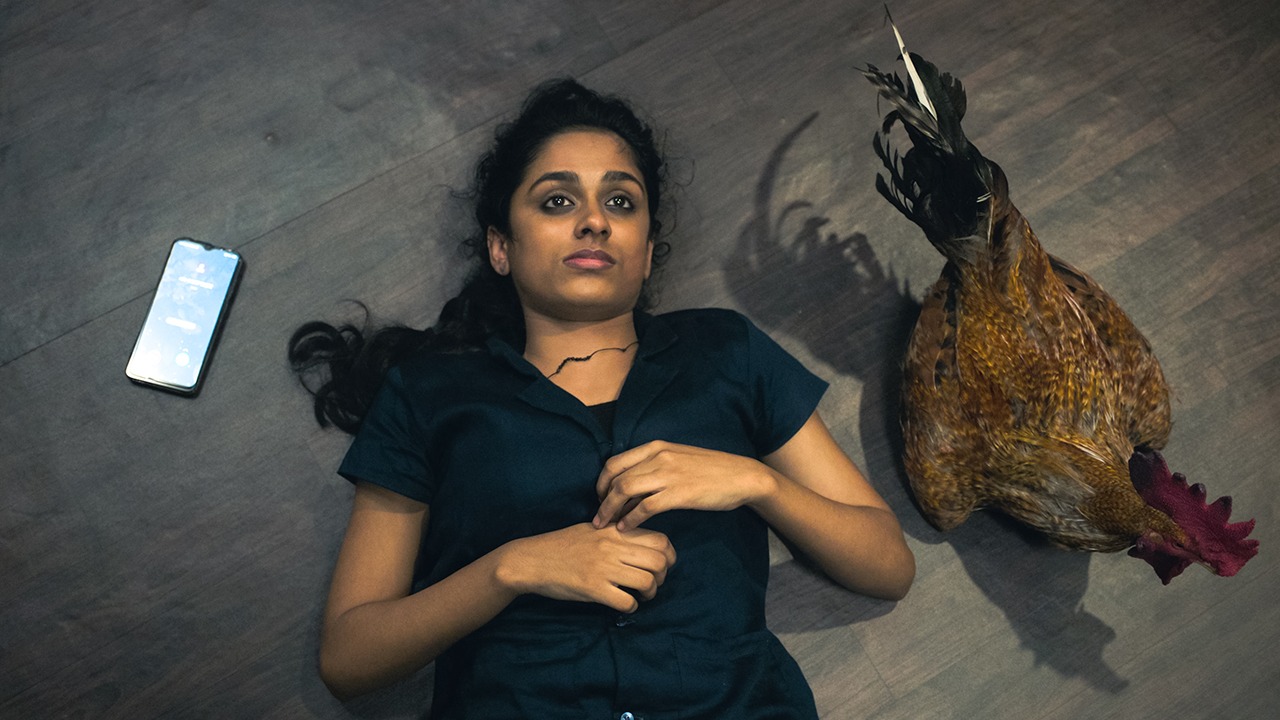
Victoria plans to run—to run from her parents, her past, and the life chosen for her. But when a rooster meant for a church festival lands in her beauty salon, escape is delayed by chaos, comedy, and revelation.
As clients cycle through and emotions boil over, Victoria is forced to confront love, faith, and independence — all within a single transformative day.
Victoria is having a very bad day in Kerala, India. On the bus to go to work, her friend insists that Victoria needs to take the live rooster (that is to be sacrificed at a shrine) and hold on to it for the day. Victoria knows her boss won’t like it, but can’t say no.
Victoria works at a beauty salon (no men allowed written on front door) and her co-worker is out sick and the boss leaves early on a Saturday -the busiest day of the week. Amid the coming and going of customers we listen to their stories,
Victoria is also going through personal problems.
Problems with her parents and her boyfriend are compounded by her living at home. They are complicated by differences in caste and religion. Abuses, large, small, and complex plague her. She is undecided as to how to move forward. Are there solutions in everyone’s stories?
This is the US Premiere of Victoria. The original language is Malayalam with English subtitles. The movie was produced by the Kerala State Development Corporation and by the Women Empowerment Initiative of the Government of Kerela. The productions values were very good with most of the movie taking place in the beauty salon.
This movie feels especially authentic to me. In my youth I worked in a beauty salon and so I was interested in how that would be portrayed this movie. Because it is set in India, the beauty salon parts are both familiar and very different. But the women who come in and their stories are very much true to life.
Victoria is showing twice during Cinequest and is also available during Cinejoy, the virtual version running March 24 through 31, 2026. Click here for more information.
Showings
Wed, Mar 11 4:55 PM California Theater Center, San Jose
Every year, Cinequest examines what’s happening in the world of genre film, and this year we’re bringing fifteen world-class short films in action, science fiction, fantasy, horror, and thrillers. Whether it’s a look at ghosts, time travel, or things we can’t quite name, these shorts explore worlds we may never encounter, yet somehow understand instinctively.
Music videos and effects-driven dramas weave together with time-travel comedies and subtle explorations of our relationships with technology. GenreQuest tells stories that venture outside our world and into the ones that live in our hearts and heads.
Film festival shorts programs are some of my favorite and least favorite things to review, and they can be problematic for the reader of the review. It’s my hope that this review will be valuable long after this year’s Cinequest ends. But it’s unlikely the group of films will be played together again, or that names of short films will stick with the reader.
But I want to give you a taste of what the shorts programs can provide, so this will be a series of review snapshots. Not every film in the GenreQuest program, and not an expansive examination. If you’re interested, you should go to the listing in the Cinequest catalog and read more.
So with that said, let’s peep in on some of these short films.
DOORS – At 2 minutes long this one is a “don’t blink” kind of film. A woman urgently running through doors, down stairs, and eventually arming herself from an unfinished dinner. She’s obviously in a panic, and then… well, that would be telling. See how difficult it is to review this stuff? But I hope you’ll agree it was worth 120 seconds of your time.
Em & Selma Go Griffin Hunting – Tied with one other film for the longest in this program, this is a tight bit of storytelling. In a sideways projected world, a feminine coming of age story, in the tradition of similar masculine monster hunting tales. Production shines here with settings, props and profound special effects essential to the story. In a surprisingly short period of time the film makers enthrall, enchant, startle, panic, and surprise the audience cleanly and memorably. The acting is spot-on. Aside: If Selma looks familiar to you, you may recognize Pollyanna McIntosh from her role on AMC’s The Walking Dead.
Fireflies in the Dusk – It’s fun to see creators and actors from earlier Cinequest festivals, and Emily Goss is no exception. I recall her as early as 2011 and she just keeps getting better.
Fireflies is kind of a comedy time travel film. But to leave it at that would be to ignore all the other film tropes and beats that it entertains. Heavily leaning on the spirt of Somewhere in Time (Christopher Reeve, Jane Seymour, 1980) as a backbone, this film just dashes down the intersecting hallways of films it borrows from and mocks. This is the other lengthy (18 minutes) “short” and beyond the borrowing and mocking, it’s uniquely a fresh comedy.
Reprogrammed – OK, now when I see a cuddly AI in a film festival short, I typically think “well, somebody’s gonna die.” Well, put your mind at ease here. This is a nice exploration of the complexity of feelings, avoidance, dedication, and unexpected avenues of help.
You can relax and enjoy this… or can you?
No, seriously, you can.
Spooky Encounters of the Sad Kind – Sometimes short films are like poetry. Using just the right words, feelings, and encounters we can explore quite a bit in just a little time. Our main character is a amateur film maker. And apparently her flat is haunted. Of course this is an opportunity. First make contact with the ghost. Chat him up a bit. And then explore sadness, loneliness, creativity, audiences, and how one person’s disappointment is another’s… well, just being seen. Lovely film at just the right length.
Wax Girl – OK, time to get creepy. For nine minutes. An artist receives a lifelike statue at his home/studio. He begins to sketch it, talking to it about the Pygmalion myth as he sketches. And then he falls asleep. I will go no further than to say if you were ever a fan of Rod Serling’s The Night Gallery, this would make a more than worthy addition to that collection. This is from Stimson Snead, another Cinequest return visitor, who wrote and directed 2024’s bizarre and wonderful Tim Travers & the Time Travelers Paradox.
When I See You At The End Of The World – And while some short films are like poems, others are like riddles, that resolve into poems. Without end credits, this film is just under 6 minutes long. Its description in the Cinequest catalog is almost 600 words, more than most feature descriptions. The film voice over is mostly Mandarin Chinese, subtitled in English, with the only spoken line in English. There are a lot of unexplained visuals, but I’ll stop there. I would challenge you to watch the film first, saving the catalog description for post-viewing. And remember that last line, which feels close to a haiku poem. You’re going to have to decide about this film on your own, but don’t be too quick to do so.
This has only been about half of the experiences you’ll have watching Cinequest’s GenreQuest shorts. As with most shorts programs, you’ll likely like or love some, and others may not be to your taste. The good thing is that if you’re not enjoying one of them, just wait a moment and give another a chance. You’re bound to find enough to make these experiences worthy your while.
Showings
Wed, Mar 11 9:30 PM Hammer Theatre Center, San Jose
Dive into the eccentric, chaotic world of B-movie film making, where ambition, compromise, and sheer determination collide in glorious, often ridiculous fashion. Behind the scenes of the notorious production house The Asylum, a struggling filmmaker faces the ultimate test of creativity, patience, and audacity.
Mockbuster Movie Poster
If you love anything, you are always withholding judgment on some level. You don’t criticize a child’s first steps, oh so wobbly, a classic work of prose, I just don’t buy Scrooge’s transformation, or love at first sight, if only the tip of her nose wasn’t quite so sharp! Love is what it is, and it accepts.
Given that, I will confess that some of my all-time favorite films are confused, low-budget exercises in pretense. And I typically don’t consider them as competition for big budget Hollywood spotlight films. But I am quick to recommend them if there’s enough there to admire on some level, and when I’m recommending them to the right person.
This review is an exercise in that impulse. So stick with me.
Mockbuster is a documentary about a fledgling director, Anthony Frith. After many years working in industrial films, he yearns to make “a real movie.” At his ends, Frith makes a somewhat-less-than-Faustian deal with an admittedly notorious film company called The Asylum.
Show business is a business. Asylum is in the business of making movies that make more money than they cost to make. They do this by keeping costs painfully low, and production time insanely tight. They make schlock movies with no pretense. They choose fast and cheap in the “good, fast or cheap, pick two” equation. And because of this, they are prone to make money on their films.
And The Asylum is not bashful about their method. For example, the film Frith signed up for is based on Edgar Rice Burroughs (remember Tarzan?) The Land that Time Forgot. The Asylum chose it because the 1924 Burroughs work is in the public domain. While it was first filmed and released in 1974, they saw no reason not to do it again, now. As a matter of fact, The Asylum had already done a version in 2009! A new 2025 script, free name recognition, better cheap digital effects, so yeah, why not make it again?
Anthony Frith
Frith signs up for the grueling and intimidating job. But what is brilliant here is that he obviously had a second film in mind as well. A film about making a low budget genre film on a shoestring budget and crushing deadline. And that film is the documentary Mockbuster.
Cue the vaudeville comedians. “How do you make a 9 out of 10 star movie with no budget?” Mr Bones?” “Make a 2 star movie and simultaneously make an 9 star documentary about it.” Brilliant, and it’s a wonder it’s not been done more often.
The bulk of what we see disclosed here is amateurish. But don’t forget your Latin! Amateur comes from the verb amāre, meaning “to love.” Further, the French amateur means “one who loves.” Amid the sweat, stress, compromises, we see cast and crew who all, on some level, just love what they’re doing. And they are entertaining to watch.
The Land that Time Forgot… from 2009?
Beyond fun, this is certainly an instructive experience for any creator. So many discover that it is terribly hard to finish. Unwilling to accept compromise. Their vision must be complete. And this dedication is the reason why so much work fails to actually come to completion. This film captures that struggle. We watch Frith and cast surrender to the madness of The Asylum.
More than most documentaries, Mockbuster has all the classic film beats. It’s complete with a dramatic tension, and genuinely human interactions. Bonus! There is no small amount of insight into how films actually get made. But does it have a “Hollywood ending?” Well, I suggest you watch it and see.
It should be obvious by now that I think this is a must-see for anyone who loves films. Great to have this year at Cinequest.
Director: Anthony Frith
Screenwriters: Anthony Frith Sandy Cameron
Showings Fri, Mar 13 12:30 PM at the Hammer Theatre Center, San Jose
Sun, Mar 22 12:00 PMAlamo Drafthouse Cinema Mtn View
Post credits scene: If you’re curious after watching Mockbuster, you can find currently The Asylum’s 2026 version of The Land that Time Forgot on several streaming services. It’s not hard to find. Note however, I said “you can” and not “you should.” But then again…
Set in 2086, Falsehood unfolds in a world transformed by the invention of recorded human memory. Once celebrated as the ultimate instrument of justice and historical truth, memory technology has instead become humanity’s most dangerous asset. Governments regulate it. Criminals weaponize it. Faiths fracture over it. At the center of global unrest lies a forbidden artifact: the first human memory ever recorded, sealed away and known only as the Memory of Falsehood.
One of the more perfect films to start off coverage of the Cinequest Film Festival. A great example of the creative powers in independent film making.
Director Ethan Hickey’s Falsehood is a dark, twisty tale of political and social powers. It makes the viewer rethink the aspects of memory and it’s ownership, as exercised in cover-ups and world-changing events. Elements are undeniably science-fiction, yet telling a story of faith, truth, and betrayal of both. It dives into previously unexplored areas while experiencing fundamentally human conflicts of what we know, and what we believe.
The filmmakers have embraced a vision of amazing technology that allows for the manipulation and storage of human memory. But do so using devices that have a more retro feel. The combination feels surprisingly more believable than the typical electronic magic wands that most future fantasies employ. Ironically, and important for many indie films, it would have saved them a bit of film budget. I always appreciate this less is more aspect of independent film making.
The film winds a path through a political struggle, an election of a new president. The campaign hinges on a long-kept secret managed by the president. It will either continue to be restricted by the incumbent leader, or exposed by their successor. An investigation by the Department of Memory eventually discovers a truth. The agent involved is the brother of the challenging candidate. He must decide whether to support the memory’s suppression or aid its exposure.
That’s about as far as I can go without spoiling the film. This is a good film to see with a friend or group. The inevitable post-film discussion of memory as something that can be taken away or examined postmortem is bound to spur, ahem, memorable discussions. Truth vs Faith is not an uncommon film subject, but here it takes on a few more interesting dimensions.
Recommended for viewers that like a new set of thought provoking problems being exposed in a science fiction setting.
I will warn the viewer that the film doesn’t give you a tidy ending. There’s plenty of ambiguity here, but it doesn’t feel totally out of place. In fact, I think the film would have been lessened if every question asked were answered. Also, be warned not to leave during the early credits because there is a story coda that has yet to show up.
Director: Ethan Hickey
Screenwriters: Mouloud Kay Ethan Hickey
Showings March 12, 9:30 PM at the California Theater, San Jose March 19, 6:15 PM at the Alamo Drafthouse Cinema, Mountain View
Back in March as part of my run of Cinequest reviews I covered a particularly clever and funny film called Time Travel is Dangerous. One of the admitted problems with covering film festivals is your recommendations go to a lot of people who can’t go out and see the film. So it’s always great when a film you loved gets distribution, and folks can go out and see it!
Happy to say that Time Travel is Dangerous will soon be available through streaming platforms! Shortly you can enjoy it in your own living room!
Here’s more info from Strike Media!
Friday 22nd August, London, UK:Shakespeare Sisters & Candr Pictures are excited to share that their star-studded comedy sci-fi adventure, Time Travel Is Dangerous, will be coming to all major digital platforms from 29th September. Following a successful theatrical run earlier this year, Time Travel Is Dangerous has established itself as quintessential British cinema, earning critical acclaim for its unique blend of humour and science fiction. Writer & Director Chris Reading (Alien: Containment) has teamed up with co-writers the Shakespeare Sisters (Soundtrack to Sixteen) to mix witty dialogue, quirky characters and a touch of the absurd with a heartwarming core that will have fans coming back to watch again and again. Celebrated for its originality, Time Travel Is Dangerous has captivated audiences and critics alike.SciFi Now described the film as “endearing, surreal, and funny,” while MovieJawn called it “a hilarious, exciting, nerve-wracking adventure that made me question my beliefs about what a sci-fi movie is supposed to be.” Narrated by Stephen Fry the film features a star-studded cast including Johnny Vegas (Benidorm, Bleak House), Jane Horrocks (Absolutely Fabulous), Sophie Thompson (Four Weddings and a Funeral, Gosford Park), Mark Heap (Spaced, Green Wing) and Brian Bovell (Love Actually, Gimme Gimme Gimme). Tony Way (After Life, Game of Thrones), Guy Henry (Harry Potter, Bridgerton: Queen Charlotte), Tom Lenk (Buffy the Vampire Slayer), Laura Aikman (Gavin and Stacey, Archie), Kiell Smith-Bynoe (Ghosts, Stath Lets Flats) also star. The knockout British ensemble cast surrounds best friends and shop owners Ruth Syratt and Megan Stevenson. Both play characters based on themselves, bringing their own vibrant personalities and undeniable chemistry to the screen. The film is set around their actual Muswell Hill vintage shop ChaChaCha, bringing a real-life documentary element to the sci-fi mockumentary. Time Travel Is Dangerousfollows best friends Ruth and Megan as they run their vintage shop in Muswell Hill. When they stumble across a time machine, it occurs to them that stock is much cheaper if they ‘borrow’ from the past – well, it’s free. They don’t want to change history, or rob banks, they just want to find a nice Victorian lamp or an authentic 80s bum bag without getting sucked into the hellish time-space vortex that is “the Unreason”. The thing is, Time Travel Is Dangerous.
On the upcoming digital release, writer and directorChris Reading, said “We’re excited for Time Travel is Dangerous to be available to the biggest audience yet with the digital release. To celebrate the release, we are having an awesome launch event for the public at Alexandra Palace, with special screenings, stalls and live music which the cast will be down to support. Bringing it back to where we started in North London for one last big live event before everyone can watch at home!”
Co-writers and producers, Anna-Elizabeth Shakespeare and Hillary Shakespeare said “Time Travel is Dangerous was really fun for us to do as before and after we’ve mostly been in the rom com space and really enjoyed venturing into this laugh-out-loud comedy sci-fi where the jokes are big and often ridiculous. We just want to make people laugh – so we hope you do!”Time Travel Is Dangerousis coming to all major digital platforms from 29th September
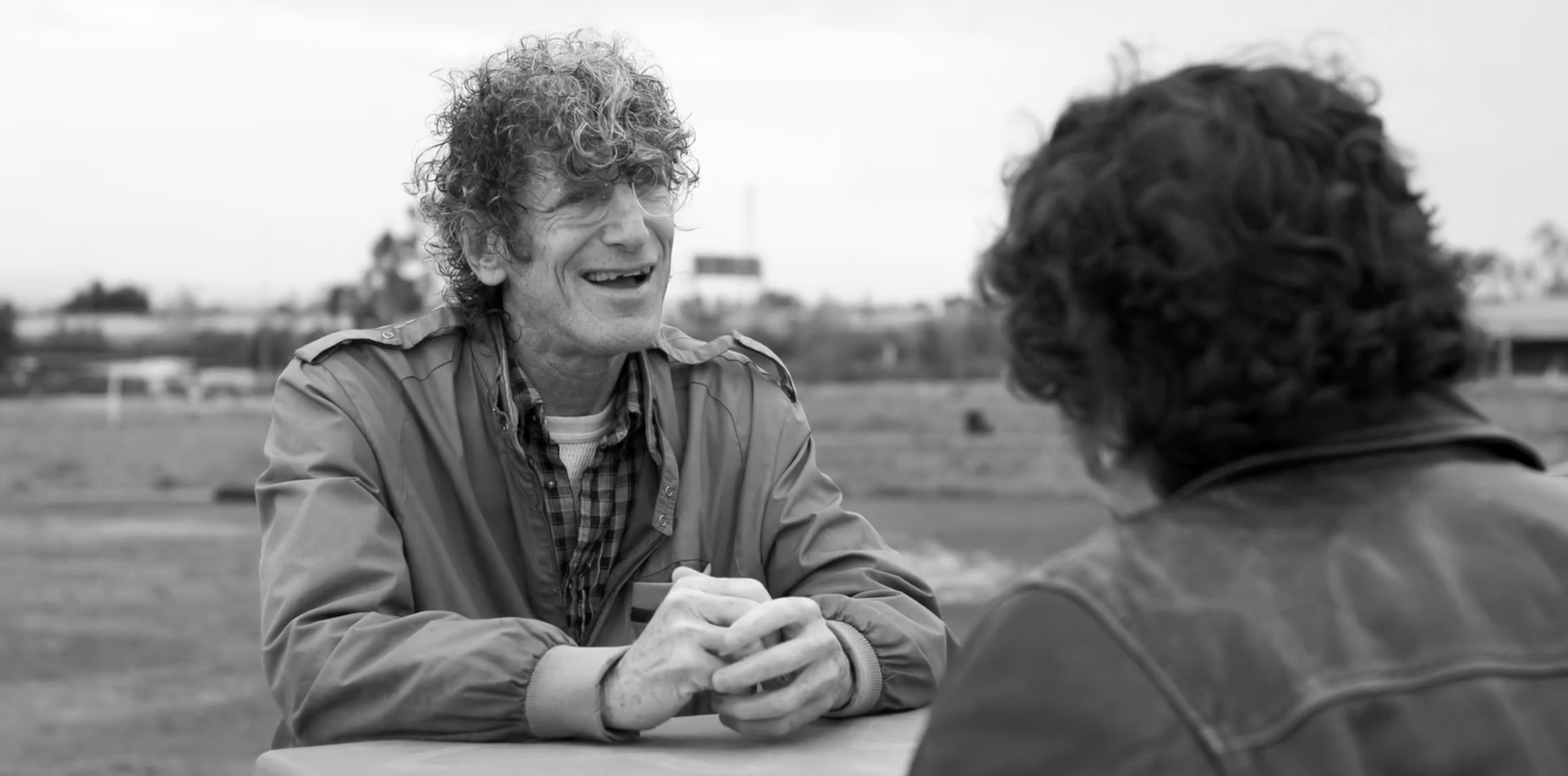
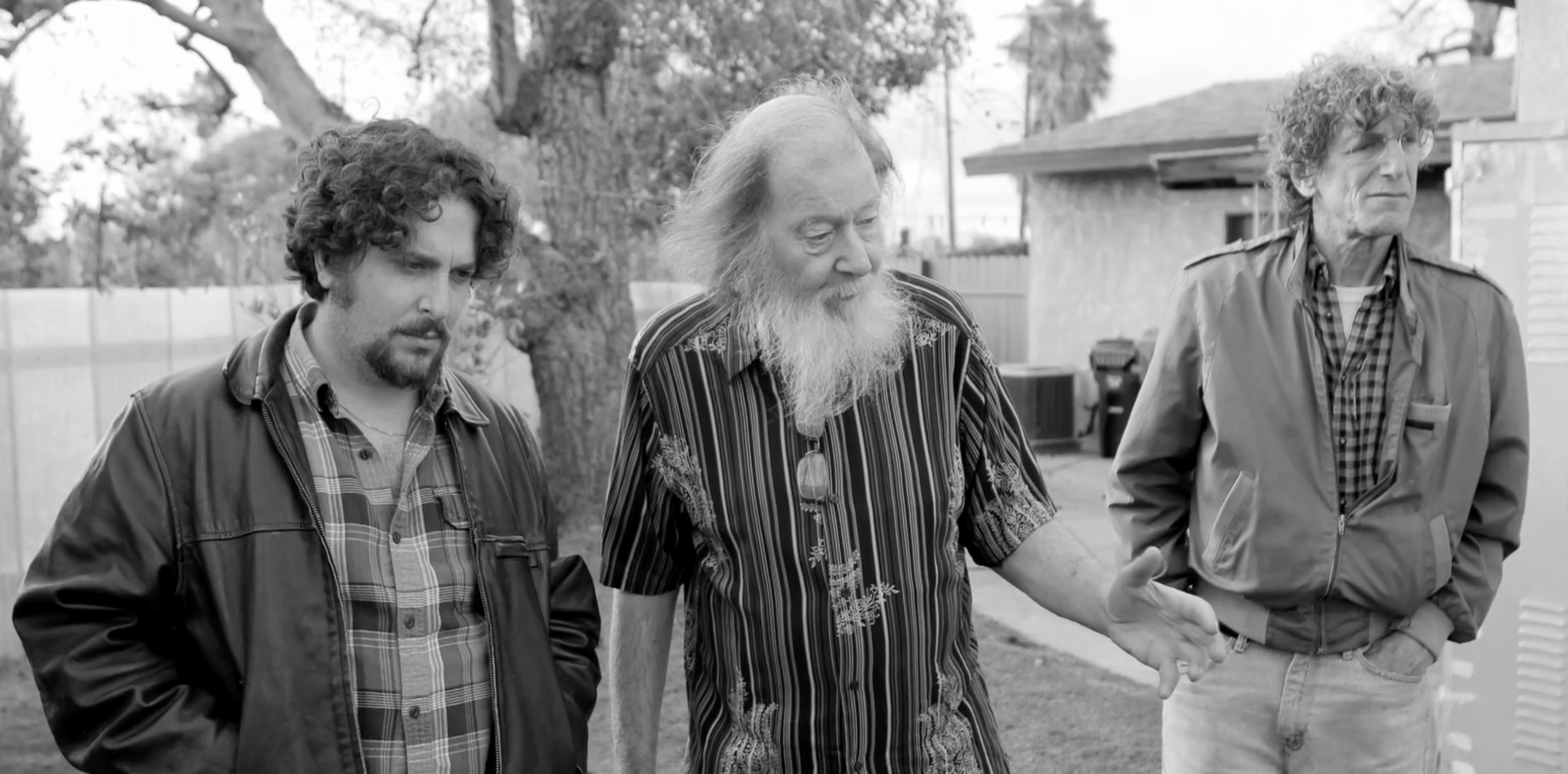
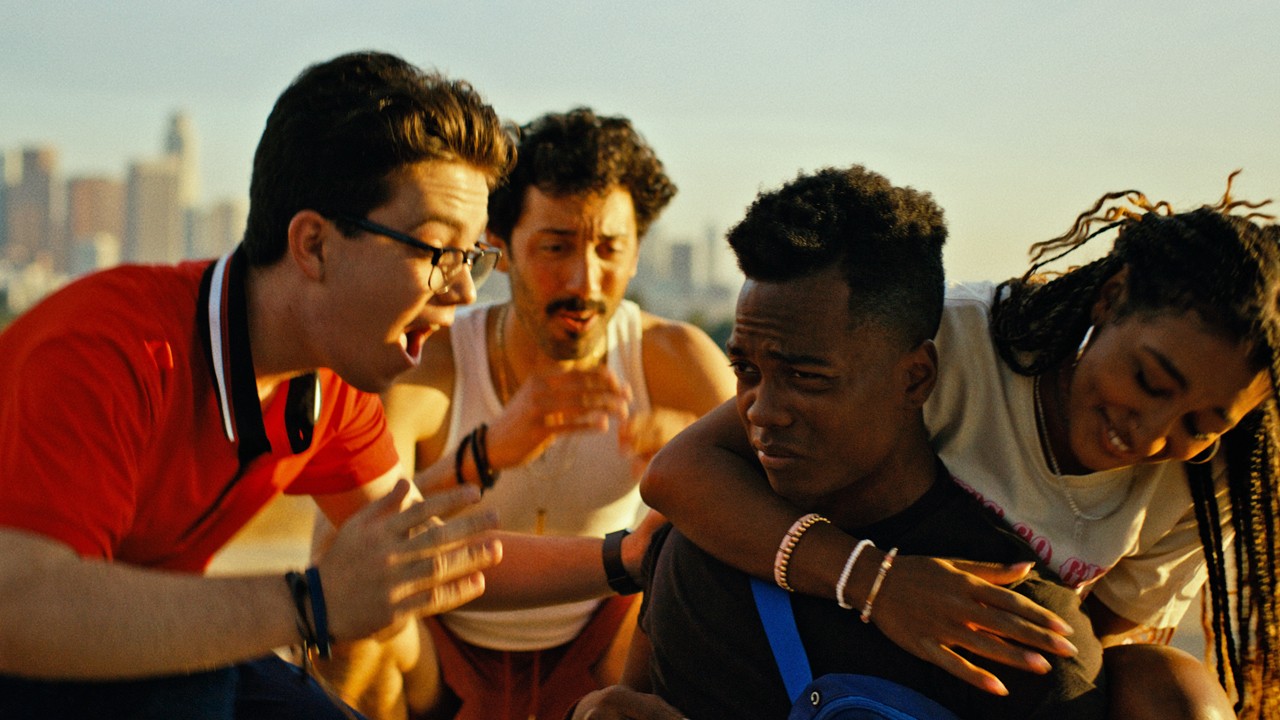
Burt, a 69-year-old street musician living with Parkinson’s, has his life turned upside down when Sammy, a wayward young man from New York, shows up claiming to be his son. Having always dreamed of being a father, Burt embraces Sammy and invites him to stay for the weekend at his home, where he lives with his grumpy landlord, Steve.
Closing out our Cinequest reviews for this season, we have a chance to look at a small, independent film with some amazing properties. Burt has some interesting aspects to examine, things we associate with independent festival films. A small cast. A very small budget. An appropriately scoped environment in which to film. And the decision to film in black and white. This is a textbook example of the kind of film you discover at festivals.
Still, in many ways Burt rises above these limitations. The script is tight, with voices given to the actors that ring true. Characters living with interesting and uniquely flawed situations. We look into the lives of elderly folks who are still characters who are deciding how to live out their years.
Burt (Burton Berger), is a guitarist and singer in his late 60’s, managing his affliction with Parkinson’s disease. Most of what he does is just give back to people with his art. He still dreams of making it big with his songs, to be a superstar. His room mate and landlord Steve, (Steven Levy), tends towards a slightly manic, a bit obsessive and unnecessarily demanding, but is actually very sharp and insightful. And Sammy, (Oliver Cooper), Burt’s newly revealed adult son, has not done well with his life, and continues to make bad decisions. The core cast works well together, so well that the handful of supporting characters are almost unnecessary to the story being told.
Of course there are some secrets here. To go any further than the trailer’s content would spoil some great surprises within the film. We could almost see the film just focusing on Burt’s delight of connecting with a son so late in life… but there’s much more to the film.
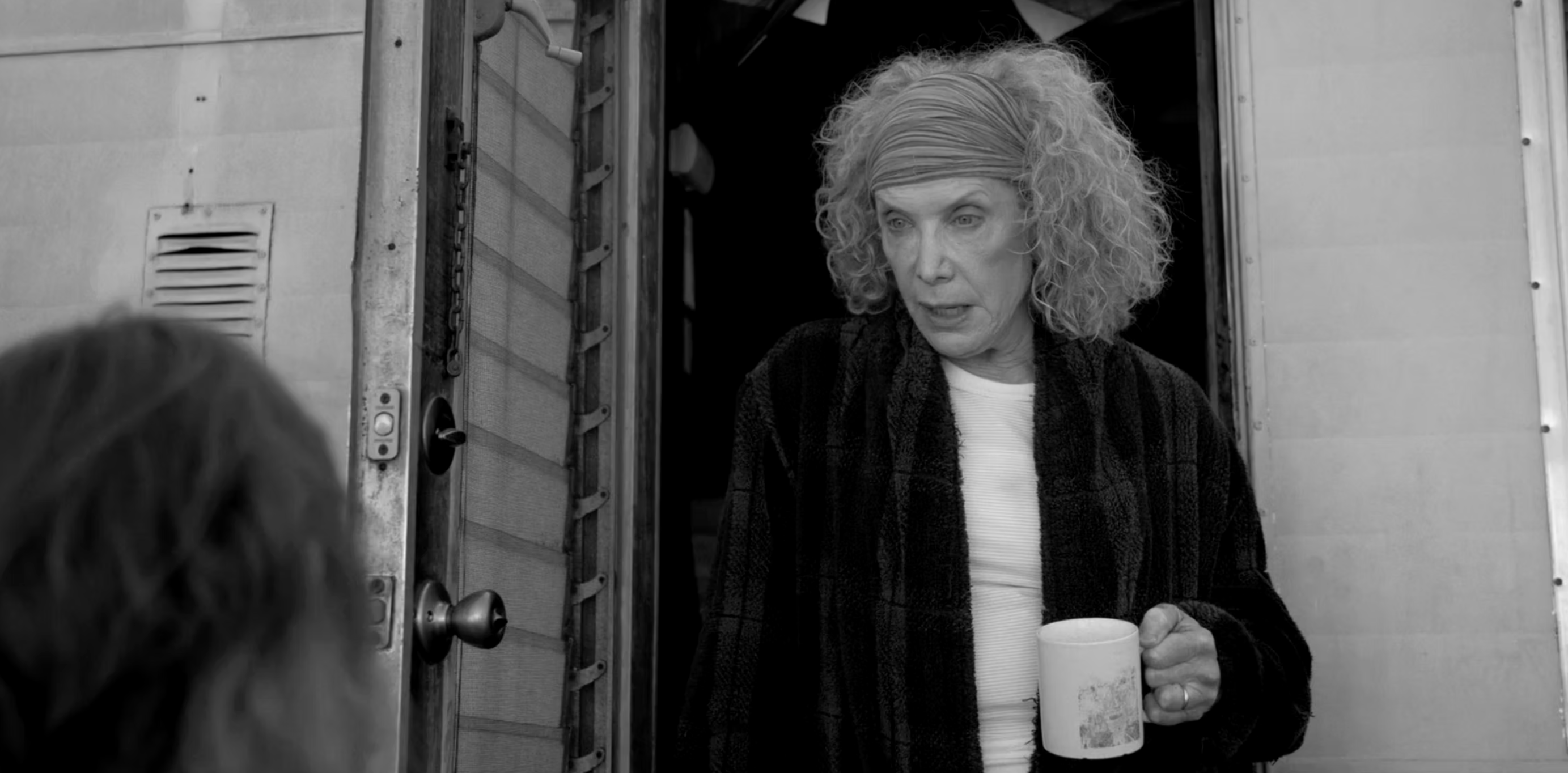
Catlin Adams, as Sylvia, is arguably the surprise fourth core member of the film.
I recommend this film without hesitation. It is amazing that such a good piece of work could be shot in just seven days on a budget of $7,000. But those are just statistics. In the end director/writer Joe Burke and co-writer Oliver Cooper have delivered something wonderful to the film festival crowd.
In the world of under-appreciated theme park work, a spirited group of performers finds their fragile optimism crumble when a co-worker secures a life-changing TV role, prompting an existential (and musical) unraveling.
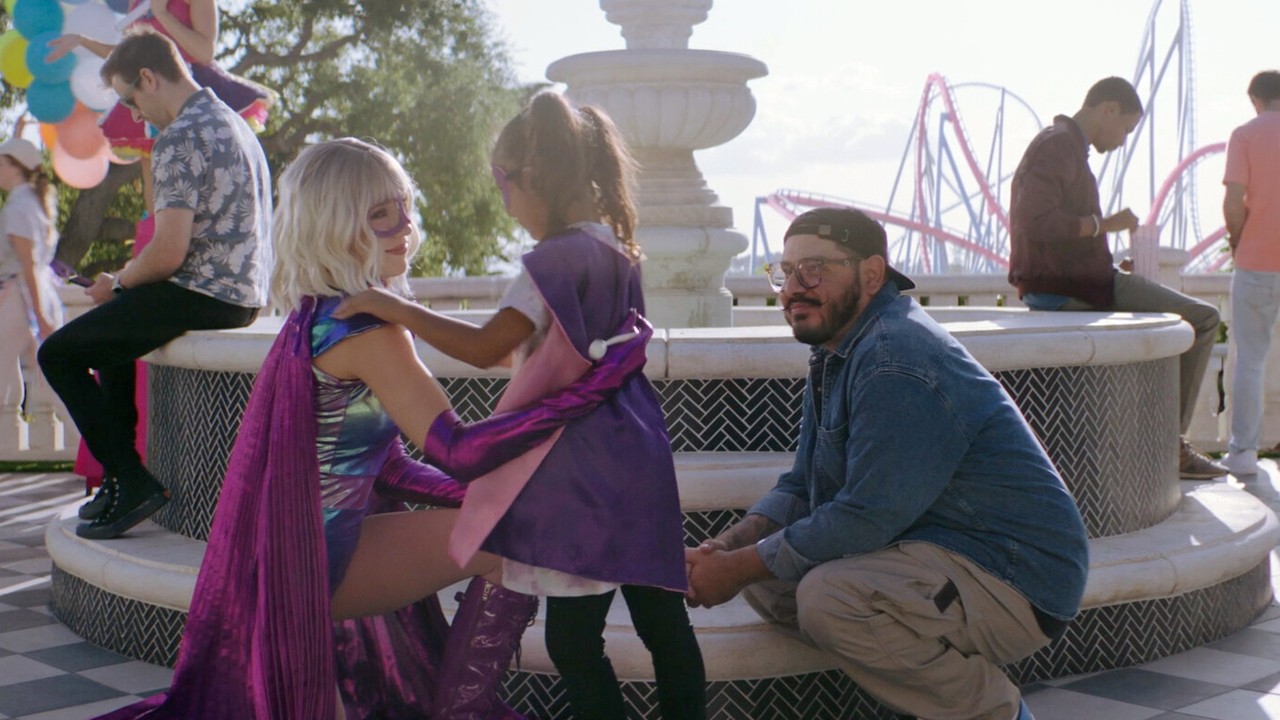
Cast Members is an enjoyable six minute short movie with a great musical number. It was created by sisters Emily Wilson (starring in the short as “Rose”) and Sarah Wilson Thacker (who wrote and directed), drawing on Emily’s decade of real life experiences of working at theme parks across Southern California.
After its showing at Cinequest, Thacker mentioned that she is trying to get the concept of the movie into a series. This would be a great series as in the movie there are 5 main cast members that we are given a quick introduction to. I could definitely see learning more about each of the Cast Members and having a musical number in each show. The moment when a cast member has an encounter with a young fan is really touching.
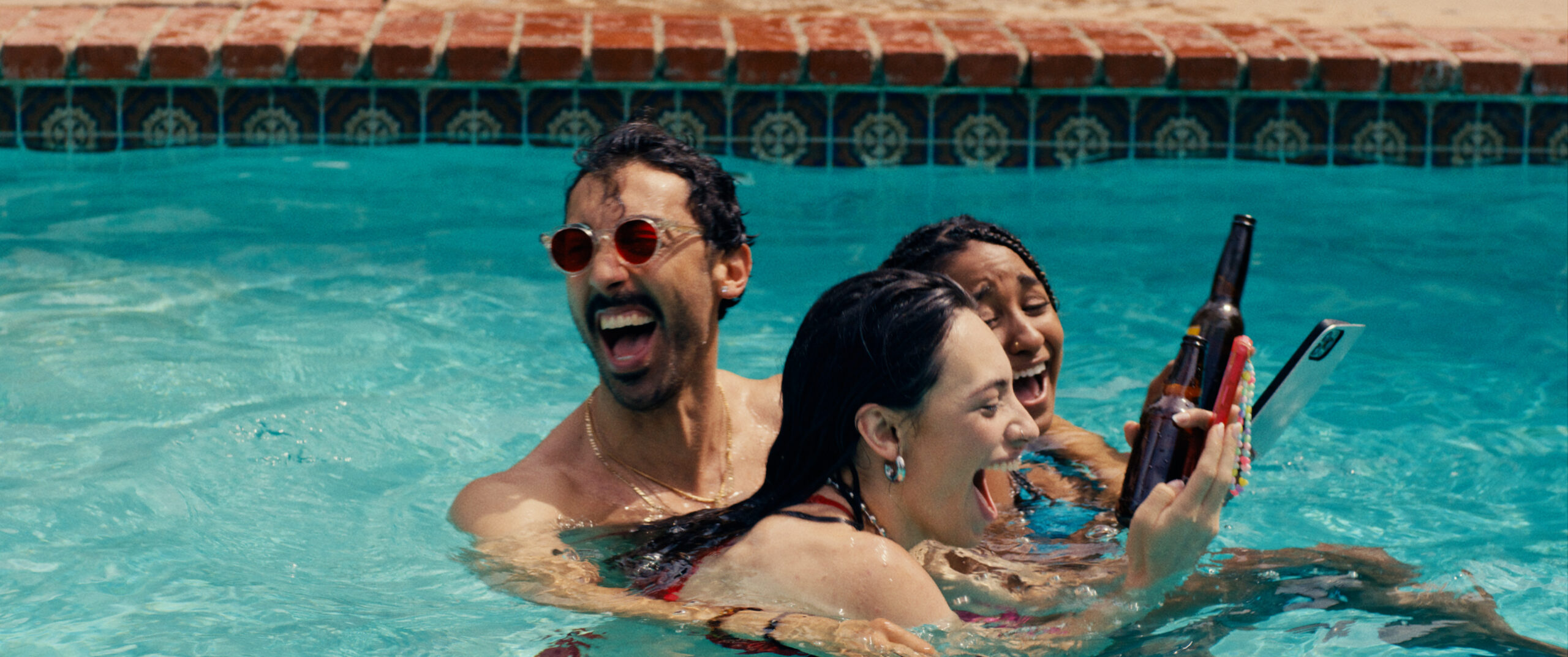
Carter, a 21-year-old mama’s boy still living at home, faces an ultimatum after his mom gets engaged to her vindictive cop boyfriend: secure a paid promotion at his internship by the end of the day or find a new place to live. Determined to land the job, Carter is handed an outrageous to-do list by his boss, including getting his Jeep detailed (it gets towed), babysitting his boss’s rebellious teenage son (he loses the kid), organizing a birthday party (a model overdoses on the living room floor), and recovering a stolen sex tape (a world-famous rapper kidnaps Carter’s best friend during a botched blackmail attempt)...
OK, Fair Warning: First off, the adult in me wants to say this film is not for kids because of language, drug use, and sex (talk.) But then the kid in me says most adults won’t understand the slang, catch on to the drug use, and there is only one sex scene and it doesn’t involve nudity. So yeah, if you want to get annoyed, you’ll get annoyed. But hey, you’ll be wrong. So sit back and enjoy the show. (Later you can Google the slang you missed.)
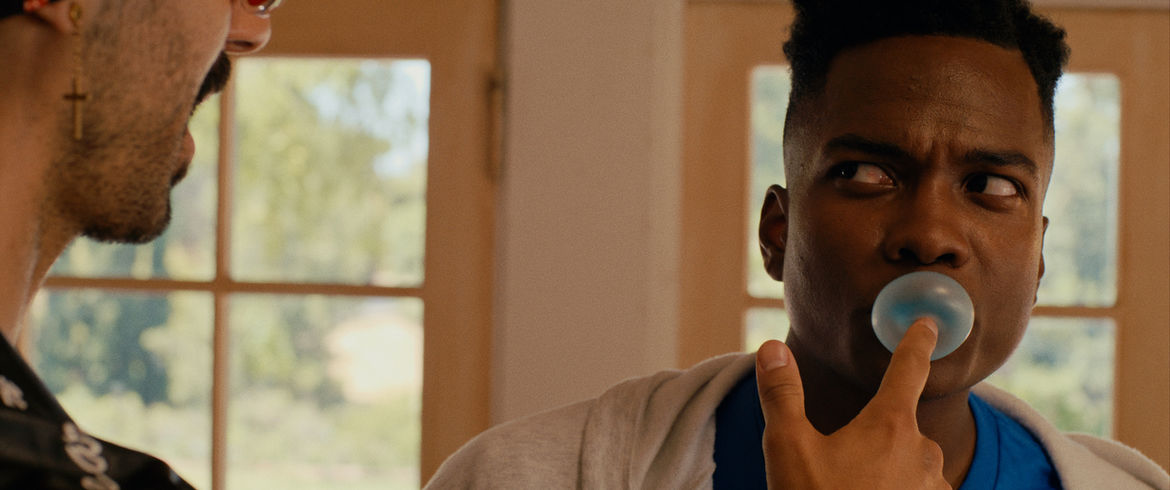
Cotton Candy Bubble Gum refers to a brand of gum that Carter uses to control his anxiety attacks. And yes, this boy has regular attacks about most everyday things. Of course, this being a movie where things that mean a lot to Carter just start falling apart, rolling down a hill, and then catching on fire… well he chews a lot of gum.
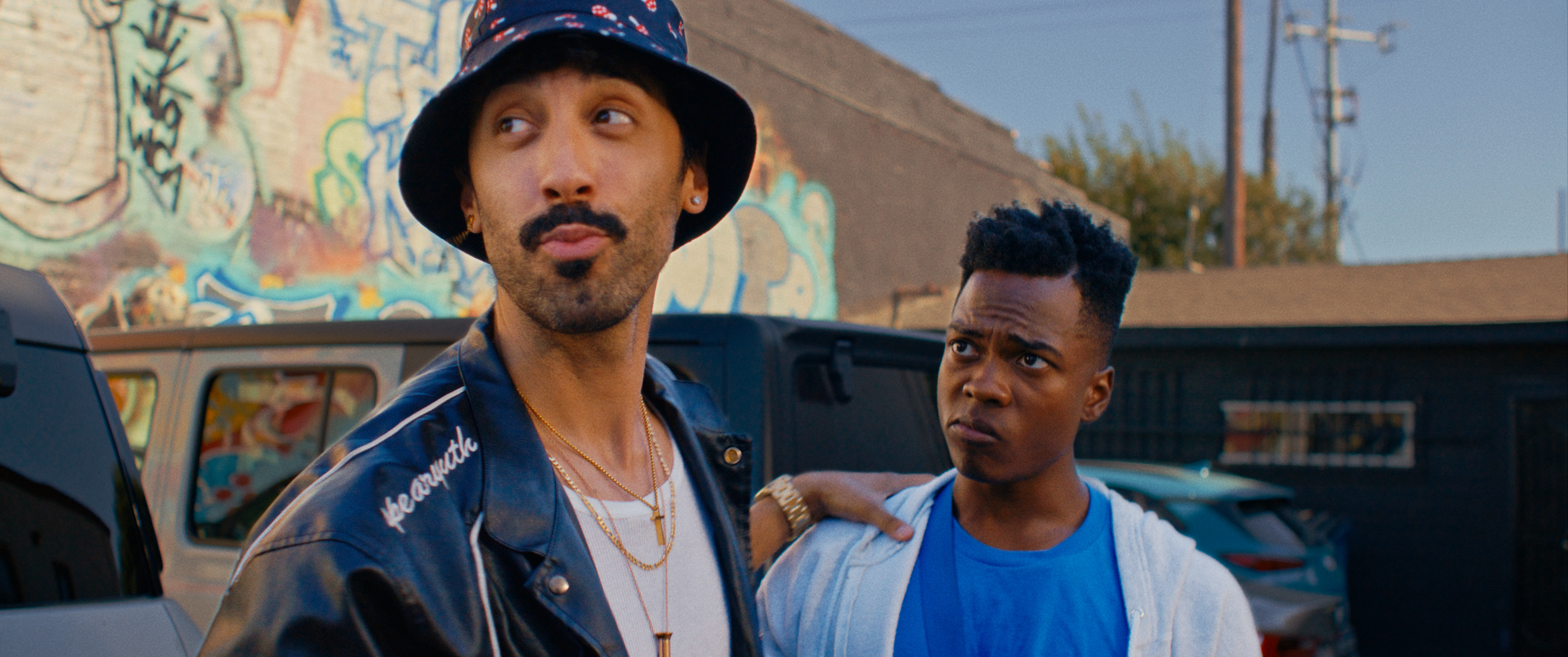
The day revolves around Carter, aided by his friend Angel, trying to elevate his position from unpaid intern to paid aid/gofer. This involves prep for a party for models, a gangster rapper named Capital Gains, and his boss. A disturbingly long and detailed to-do list is dumped on him, along with taking care of his boss’ mouthy son. Angel pops up with his brand of “help.” He’s going to make good use of the boss’ house to throw his own early party with a bag of “sched 1” (drugs, see I saved you a Google), and some models.
Without giving anything more away, things just start to unravel from there.
There are a lot of fun locations here, and the camera work moves us seamlessly through the geography and the day. Although I didn’t hear anyone mention their location in the film, I did recognize some of West Hollywood, which is always colorful and interesting. The cast is all fun to watch, and the script really moves along. While Angel is kind of a slippery and untrustworthy friend, we can really empathize with Carter. He’s really coming to a decision point in his life, and nothing is helping. Of course, the things that are burning and exploding are probably just what he needs right now.
This is one of those movies where a relatively good kid gets in over their head, and adventures just keep taking him deeper and deeper. Seems like every few years this trope these takes a snapshot of our culture. This could be the Superbad, Risky Business, or even The Hangover for the 2020’s. It’s at least a nominee.
Most independent film festivals don’t feature as many crazy comedies as Cinequest is prone to schedule, and that’s one of the reasons why Cinequest is one of the best film festivals around. You really owe yourself some time with Cotton Candy Bubble Gum.
I’m a big fan of the Pebble watch. It’s been gone for years, but recently announced a comeback. Pebble was a Kickstarter for a cool phone-connected watch that would last a week on a battery charge. It used an e-Ink display to drastically cut down power drain. It was open source, and anyone could write apps or new watch faces for it. It was damn cool.
Through a tortured series of acquisitions, Pebble eventually ended up being owned by Google. In short, that killed it. Until recently when Google announced that the Pebble Operating System (Pebble OS) was going open source. This would allow anyone to build on it and use it in products.
The original owners very quickly announced the rebirth of the Pebble, with new watches coming out “soon.” Today they started taking orders for the new watches.
OK, there’s a lot more there. But that’s enough backstory for the point of what I wanted to be a short post.
Anyway, there’s already new software (has been for a while) running on Android phones that works with old Pebble watches and will continue to be great on the new Pebble watches. Unfortunately, that’s not the case for iPhone.
In reading posts about the Pebble rebirth, I came across a blog post by Eric Migicovsky (father of the Pebble). You should read it, its very well written.
In it Migicovsky explains why there are still questions about how good the Pebble watch will be on the iPhone. Essentially he lays out how Apple restricts anyone from expanding iPhone users beyond the Apple Approved Ecosystem. And especially how only Apple can make a watch for the iPhone that is anywhere near “smart.”
This includes no way for the watch to send texts or iMessages. No way to take actions on notifications (like marking something as done.) Any kind of inter-process communication, which basically means apps talking to each other.
This last one is kind of baked into the iPhone. If you remember, the original iPhone did not allow copy and paste. Let that sink in. They saw no reason to share the simplest data between even their own apps! Of course that was implemented after a huge customer cry of “What the fuck were you thinking?” But it remains their history.
Apple is famously against information sharing except when absolutely necessary. They couch it in “privacy and security.” But it’s really about customers not buying/using anything with their Apple products except Apple products. They even take general concepts, like SMS text messaging. Modify them so they only work on Apple phones and computers. Or it makes people who aren’t on Apple phones or products look like 2nd class citizens. Consider the poor tween who cries when their friends tease them for “having parents too poor to buy them an iPhone.” Yeah, that’s a real thing, and its endorsed by Tim Apple.
Anyway, there’s a lot more here. I recently bought a new desktop Mac heavily promoted as having “Apple Intelligence.” But guess what. Unless I’m using the core Apple apps, it won’t affect any of my work on the platform. And that’s OK. Apple Intelligence is pretty lame right now. I didn’t buy my new computer for “AI.” The Apple apps (Numbers, Pages, Keynote, and Safari) aren’t good enough for the work I do. I just needed a new computer because my old Mac was about to start failing and I wanted to get ahead of the failure. Because users can’t fix or upgrade old Macs. By design. Yeah, another thing.
Before you write me off as a Apple hater, I’m really not. I’m often disappointed about how they feel they have to lie and make stuff up about how great they are. They are pretty great, but they’re not godlike. There are reasonable alternatives. And for the first time in a long time the Windows PCs outnumber the Apple products in our home. I’ve had a Mac on my desk since July of 1984, and it’s my primary machine to this day. I think it’s a great computer, in spite of the anticompetitive shit Apple does to make it a cult machine.
I just wish Apple would drop all the restrictive bullshit and actually become as great as they say they are.
Ric Bretschneider March 18, 2025 San Jose California
The fun and inspirational story of five people from around the U.S. who descend on the Culinary Institute of America in NYC to participate in the world’s premiere educational program on distilled spirits and mixology.
Bar is an amazing, intense, and engaging documentary about people trying to become certified world class experts on all things bar and bartending related. It takes place in a five day program at the NYC Culinary Institute of America called the BAR 5-Day Program. The founding members of BAR created a certification for the best bartenders on the education about creating Craft cocktails. The movie introduces us to five of the 78 students training at BAR 5 and follows them throughout the 5 day of intensive training and testing.
The program is intense. The filmmakers really excelled in bringing the viewer into intimate stories of the class and teachers while respecting the intensity all are subject to during the week. This is so good it could have been a scripted film, but it’s all the more impactful for the real stories that are told.
We watch as the staff explains the origins and structure of the class. Days of introduction and training, followed by both practical (mixing drinks, and blind tasting of ingredients) and written exams. The goal is teaching and testing of students, most of whom already have deep knowledge and experience, so they can qualify for one of the certifications that will stand for their world-class experience and qualifications. To walk into any bar in the world and tend it unquestioned.
The movie also spends much of its time with the background crew of BAR graduates that come just to staff and assist with the running of BAR 5. They interviewed many of them to show how BAR 5 has helped their careers. Staff are aided by student workers, part of the class who are assisting in the setup, production, and break down of the five day class while also taking the same tests as those who paid full price. Any one of these could have been the focus of the film, but all together it’s amazing.
After 3 days of up to 16 hours of teaching and preparation, testing begins. The students have to make 6 cocktails in 10 minutes and can only use 4 ingredients, including the garnish. They are given 5 of the required cocktails and then make their own “signature” cocktail.
And the last day is a written test. Although the quietest part of the movie, the filmmakers capture the intensity of the culmination of the class, and the hopes of the students.
Paper Plane, Later That Same Night
The movie ends weeks later, with the filming the 5 students getting their results over Zoom. Again, the documentary crew provides an intimate capstone to these stories. There is comradery between the bartenders, whether students, teachers, or support members. All shared the experience and have an emotional stake in the results. Again, the filming and editing are top notch and never feels intrusive during the movie. A postscript to the film brings us up to date on the further careers of the five focus students and their varied successes.
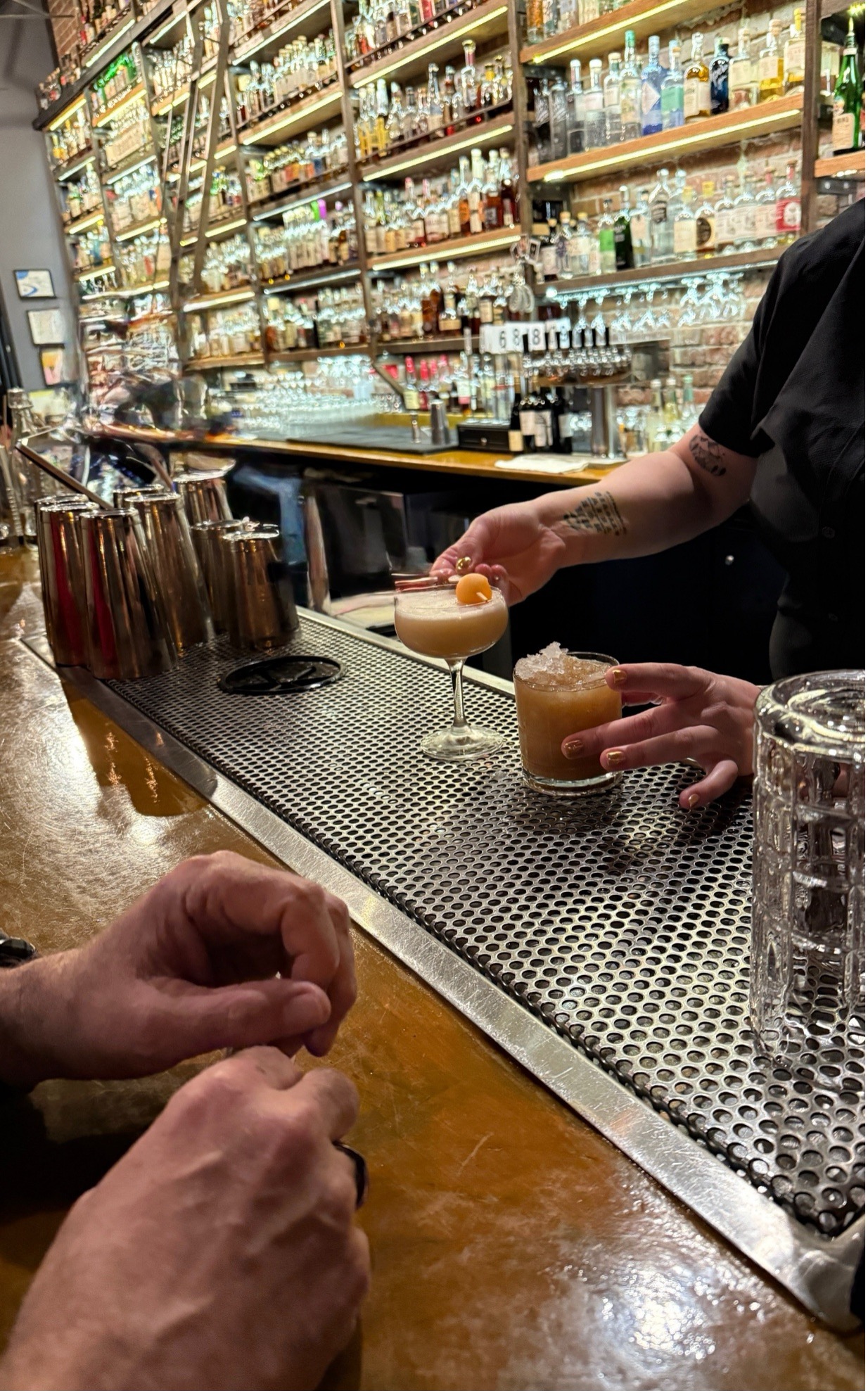
Cinequest attendees were invited to attend a singular event after the World Premiere of BAR. All were invited to the Paper Plane bar on San Jose’s First Street. It was great to see bartenders at work after enjoying the movie.